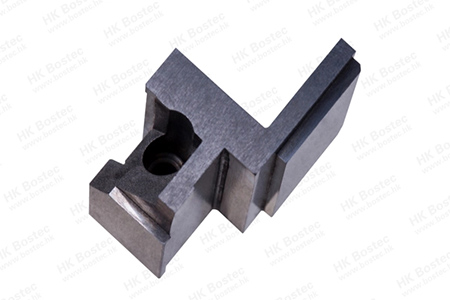
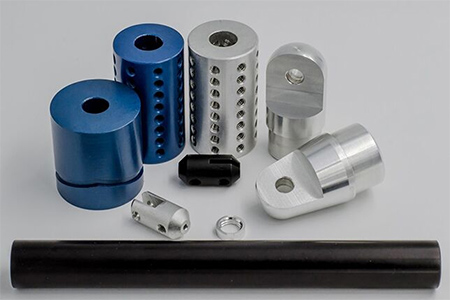
Selecting the right machining process is one of the most important decisions in precision manufacturing. Wire EDM, CNC Milling, and Precision Grinding can all produce high-accuracy components, but each process is designed for different engineering requirements.
Wire EDM is typically the best choice for hardened conductive materials, intricate profiles, and complex features requiring minimal mechanical stress. CNC Milling provides greater flexibility for three-dimensional components, rapid material removal, and multi-feature machining. Precision Grinding is generally selected when final dimensional accuracy, flatness, and surface finish requirements exceed the capability of standard machining operations.
For many advanced components, the most effective manufacturing strategy is not choosing a single process but combining multiple technologies. A component may require CNC Milling for initial shaping, Wire EDM for precision features, and Grinding for final surface refinement.
At HKBOSTEC, machining solutions are developed based on part geometry, material characteristics, tolerance requirements, and production objectives. This engineering-driven approach helps customers achieve reliable precision components for demanding applications.
Although Wire EDM, CNC Milling, and Precision Grinding are all precision manufacturing technologies, they remove material through completely different mechanisms.
The correct process selection depends on several engineering factors:
Material hardness
Electrical conductivity
Component geometry
Required tolerance
Surface finish requirements
Production volume
Cost expectations
Understanding these differences allows engineers to avoid unnecessary manufacturing complexity while achieving the required performance.
Wire Electrical Discharge Machining (Wire EDM) removes material through controlled electrical discharges between a continuously moving wire electrode and a conductive workpiece.
Unlike conventional cutting methods, Wire EDM does not apply significant mechanical force to the component. Instead, controlled sparks gradually erode the material, allowing manufacturers to process difficult materials with high accuracy.
This unique machining principle makes Wire EDM especially valuable for:
Hardened tool steels
Precision molds and dies
Complex internal profiles
Thin components
Tight tolerance features
Many engineering materials become difficult to machine after heat treatment because their hardness increases significantly.
Traditional cutting methods may experience:
Increased tool wear
Reduced cutting stability
Thermal deformation
Lower dimensional accuracy
Wire EDM avoids these problems because the cutting process is based on electrical discharge rather than physical contact.
This makes it suitable for producing:
| Component | Typical Application |
|---|---|
| Mold inserts | Injection molding tooling |
| Punches and dies | Stamping applications |
| Precision plates | Industrial equipment |
| Complex profiles | Aerospace and medical components |
| Fine slots | High-accuracy assemblies |
HKBOSTEC provides advanced wire EDM machining solutions for customers requiring accurate profiles, complex geometries, and consistent dimensional performance.
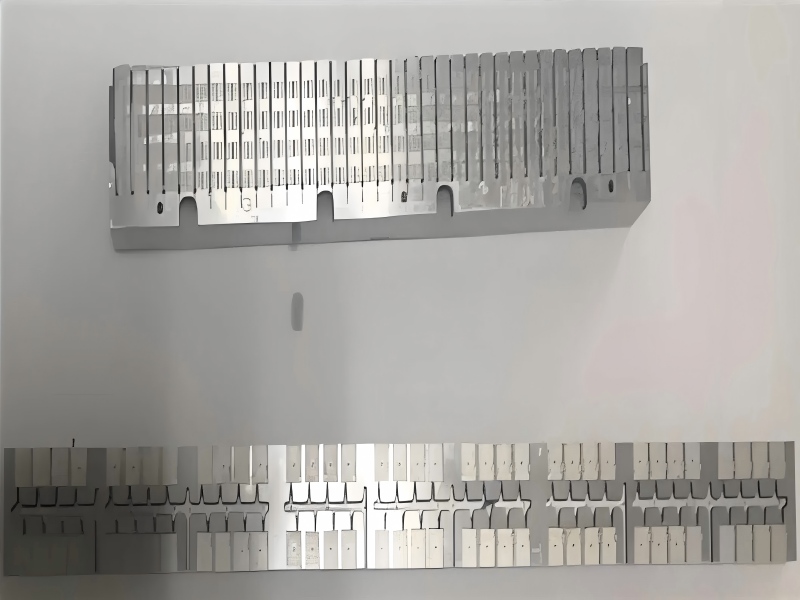
Wire EDM can produce intricate shapes that may be difficult to achieve with conventional cutting tools, including narrow slots, sharp corners, and complex contours.
Because there is almost no cutting pressure, delicate components can maintain their original shape during machining.
Manufacturers can machine hardened materials after heat treatment without significantly affecting material properties.
Despite its advantages, Wire EDM also has limitations:
| Limitation | Explanation |
|---|---|
| Material restriction | Only electrically conductive materials can be processed |
| Lower material removal rate | Not ideal for large-volume rough machining |
| Additional finishing may be required | Some applications need polishing or grinding afterward |
Therefore, Wire EDM is typically selected for precision-critical features rather than bulk material removal.
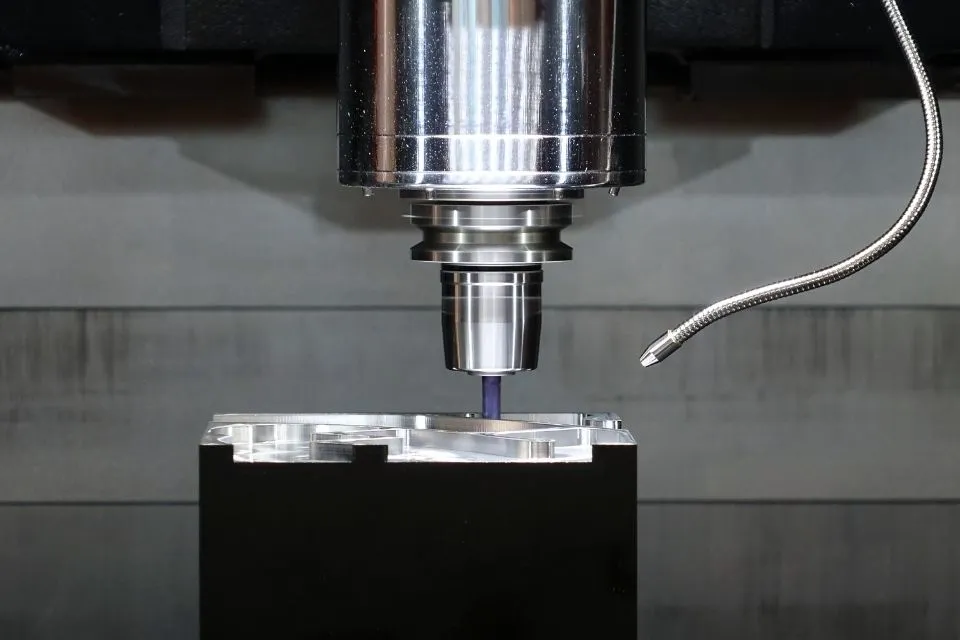
CNC Milling uses rotating cutting tools controlled by computer numerical systems to remove material mechanically.
Unlike Wire EDM, CNC Milling creates components through direct cutting action, making it highly effective for removing large amounts of material and producing complex three-dimensional structures.
CNC Milling is widely used for:
Aluminum components
Stainless steel parts
Mechanical housings
Industrial fixtures
Prototype components
Production parts
CNC Milling is usually preferred when the component requires:
Multiple machining features
Complex 3D surfaces
Fast material removal
Different tool operations
Flexible production capability
For example, an aerospace bracket with curved surfaces, mounting holes, pockets, and threaded features is generally better suited for CNC Milling than Wire EDM.
HKBOSTEC delivers professional CNC milling services for precision components requiring efficient machining, reliable tolerances, and consistent production quality.
| Factor | Wire EDM | CNC Milling |
|---|---|---|
| Cutting method | Electrical discharge | Mechanical cutting |
| Best material condition | Hardened conductive materials | Wide range of metals and plastics |
| Geometry capability | Complex profiles | Complex 3D structures |
| Material removal speed | Moderate | Faster |
| Cutting force | Nearly zero | Mechanical force applied |
| Best application | Precision tooling and difficult features | General precision components |
Precision Grinding is a finishing process used when a component requires higher dimensional accuracy, improved surface quality, and better functional performance than conventional machining can provide.
While CNC Milling and Wire EDM can produce highly accurate geometries, certain applications require additional finishing operations to achieve:
Extremely tight dimensional tolerances
Improved flatness and parallelism
Controlled surface roughness
Better contact performance
Enhanced wear resistance
Grinding removes very small amounts of material using abrasive wheels, allowing manufacturers to refine critical surfaces without significantly changing the overall geometry of the component.
Many high-performance components require multiple manufacturing stages.
A common production sequence may include:
Rough machining to create the basic shape
CNC Milling for complex features
Wire EDM for precision profiles
Grinding for final dimensional control
Inspection to verify specifications
This approach allows manufacturers to combine the strengths of different machining technologies.
For example, a precision mold component may require milling to create the overall structure, Wire EDM to produce detailed cavity features, and grinding to ensure accurate mating surfaces.
Precision Grinding is commonly used in industries where even small dimensional variations can affect product performance.
Typical applications include:
| Component | Manufacturing Requirement |
|---|---|
| Mold plates | Accurate alignment and flatness |
| Precision guides | Smooth movement and low friction |
| Tooling components | Stable dimensions under load |
| Bearing surfaces | Reduced wear and improved reliability |
| Inspection fixtures | Repeatable positioning accuracy |
For these applications, surface quality is not simply an aesthetic requirement. It directly influences assembly accuracy, operating performance, and service life.
There is no single machining process that is always the most accurate.
Accuracy depends on:
Machine capability
Material stability
Component design
Cutting parameters
Inspection methods
Environmental control
Each process has different strengths.
| Requirement | Recommended Process |
|---|---|
| Complex hardened profiles | Wire EDM |
| Large material removal | CNC Milling |
| Final dimensional correction | Precision Grinding |
| Tight surface finish requirements | Grinding |
| Multi-feature 3D components | CNC Milling |
| Intricate internal geometries | Wire EDM |
The best manufacturing strategy often combines these processes rather than selecting only one.
Material characteristics significantly affect machining decisions.
Hardened tool steel is commonly used for molds, dies, and tooling components. Because of its high hardness, Wire EDM is often preferred for producing accurate features after heat treatment.
Aluminum is lightweight and highly machinable, making CNC Milling an efficient choice for structural components and prototypes.
Titanium provides excellent strength-to-weight performance but requires careful machining strategies due to its low thermal conductivity and cutting challenges.
Carbide is extremely hard and wear-resistant. Wire EDM is often selected because conventional cutting tools may experience excessive wear.
Engineers should evaluate several factors before choosing between Wire EDM, CNC Milling, and Precision Grinding.
The shape and complexity of the part are often the first deciding factors.
Choose Wire EDM when the part requires:
Narrow slots
Sharp internal corners
Complex profiles
Hardened precision features
Choose CNC Milling when the part requires:
Deep pockets
Curved surfaces
Multiple machining operations
Three-dimensional structures
Choose Grinding when the part requires:
Precision finishing
Flatness improvement
Surface refinement
Not every feature requires the same tolerance level.
Applying extremely tight tolerances to non-critical dimensions can increase manufacturing costs without improving component performance.
A practical approach is to classify dimensions:
| Feature Type | Recommended Approach |
|---|---|
| Critical assembly surfaces | Tight tolerance and grinding consideration |
| Complex profiles | EDM or advanced machining |
| General dimensions | Standard CNC machining tolerance |
| Surface contact areas | Precision finishing |
Production quantity also influences process selection.
| Production Requirement | Suitable Process |
|---|---|
| Prototype development | CNC Milling |
| Small precision batches | Wire EDM / CNC Milling |
| High-volume components | CNC Milling optimization |
| Precision tooling | Wire EDM + Grinding |
At HKBOSTEC, process selection is based on engineering requirements rather than simply choosing one machining method.
The manufacturing team evaluates:
Material properties
Part geometry
Functional requirements
Required tolerance
Surface finish
Production expectations
By integrating Wire EDM, CNC Milling, Precision Grinding, and inspection capabilities, HKBOSTEC provides complete precision manufacturing solutions.
This integrated approach helps customers reduce unnecessary processing steps while achieving reliable component performance.
Industries supported include:
Aerospace
Medical equipment
Industrial automation
Semiconductor equipment
Precision tooling
Mechanical engineering applications
Wire EDM removes material through electrical discharge, while CNC Milling uses rotating cutting tools. Wire EDM is better suited for hardened materials and intricate profiles, whereas CNC Milling is more effective for complex three-dimensional components and efficient material removal.
Wire EDM can achieve extremely high accuracy, especially for hardened conductive materials and complex geometries. However, actual results depend on machine capability, material condition, part thickness, and inspection requirements.
No. Grinding is only required when the application needs improved surface finish, flatness, or additional dimensional control beyond the Wire EDM result.
Many mold components require a combination of processes. CNC Milling may create the overall structure, Wire EDM may produce cavity details, and Grinding may finish precision mating surfaces.
Different machining processes are optimized for different challenges. A single process may not provide the best combination of accuracy, efficiency, material compatibility, and surface quality.
HKBOSTEC applies engineering-based process planning, precision machining techniques, and inspection procedures to ensure components meet customer drawings and technical requirements.
Wire EDM, CNC Milling, and Precision Grinding each play an important role in modern precision manufacturing.
Wire EDM provides exceptional capability for hardened conductive materials and complex precision features. CNC Milling offers flexibility, efficiency, and excellent performance for complex component production. Precision Grinding delivers the final accuracy and surface quality required for demanding applications.
The correct choice depends on understanding the relationship between material properties, part geometry, tolerance requirements, and production goals.
By combining advanced machining technologies and engineering expertise, HKBOSTEC helps customers develop reliable precision components for industries requiring high accuracy, repeatability, and consistent quality.
https://www.asme.org/codes-standards