The right CNC surface finish is determined by the function of the component, not only by its appearance. A finish that works well for a decorative aluminum housing may not be suitable for a precision mechanical part exposed to friction, chemicals, or repeated movement.
For OEM manufacturers, selecting the correct CNC surface finish requires balancing three critical factors: cost, durability, and aesthetics. The wrong choice can increase production expenses, affect dimensional accuracy, shorten component lifespan, or create unnecessary processing steps.
Different applications require different finishing strategies. Anodizing may be ideal for corrosion-resistant aluminum parts, bead blasting may provide a consistent matte appearance, while polishing or precision surface treatments may be necessary for components requiring smoother contact surfaces.
HKBOSTEC helps OEM customers evaluate CNC surface finishing requirements based on material characteristics, application conditions, production volume, and performance expectations. By combining manufacturing expertise with engineering-focused recommendations, HKBOSTEC supports customers in achieving CNC components that meet both functional requirements and visual standards.
CNC machining provides excellent dimensional accuracy and complex geometries, but the final surface condition often determines how well a component performs in its actual working environment. Surface finish affects more than visual appearance; it directly influences friction, corrosion resistance, wear behavior, sealing performance, assembly accuracy, and product reliability.
For OEM manufacturers producing components for automation equipment, electronics, medical devices, aerospace systems, and industrial machinery, surface finishing should be considered as part of the engineering process rather than a final cosmetic step.
| Surface Requirement | Impact on Component Performance |
|---|---|
| Low surface roughness | Improves contact performance, precision assembly, and sealing reliability |
| Corrosion resistance | Protects components exposed to moisture, chemicals, and outdoor conditions |
| Wear resistance | Extends service life for parts exposed to friction or repeated movement |
| Consistent appearance | Improves product quality and brand perception for visible components |
| Controlled texture | Provides specific grip, optical, or functional surface characteristics |
A suitable CNC surface finish depends on the final purpose of the part. For example, an aluminum enclosure may require corrosion protection and an attractive appearance, while a mechanical component may prioritize wear resistance and dimensional stability.
OEM manufacturers should evaluate several factors before selecting a CNC surface finish. The best finishing solution is not always the most advanced or expensive option; it is the one that provides the required performance while maintaining production efficiency.
The operating environment has a major influence on surface finish selection. Components used in harsh environments require stronger protection compared with parts operating in controlled indoor conditions.
Engineers should consider:
Exposure to humidity or corrosive substances
Operating temperature changes
Mechanical contact and friction levels
Cleaning requirements
Electrical conductivity or insulation requirements
For example, aluminum components used in outdoor industrial equipment often require finishes that improve corrosion resistance, while precision internal components may require finishes focused on surface smoothness and dimensional control.
Different components require different surface characteristics. A finish selected only because it looks attractive may not provide the performance required for the application.
| Component Requirement | Recommended Surface Finish Consideration |
|---|---|
| High corrosion resistance | Anodizing, protective coating, or plating solutions |
| High wear resistance | Hard anodizing or specialized surface treatments |
| Premium appearance | Polishing, brushing, bead blasting, decorative anodizing |
| Precision assembly surfaces | Controlled finishing with tolerance evaluation |
Professional surface finishing services help manufacturers select suitable processes based on actual application requirements instead of applying the same finishing standard to every component.
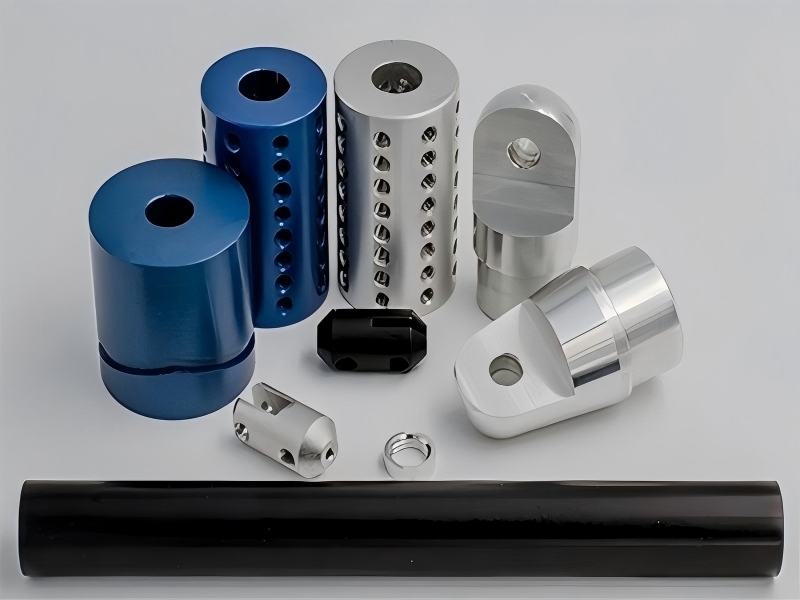
The base material plays an important role in determining the final surface quality. Different metals respond differently to finishing processes, and selecting an unsuitable treatment can lead to inconsistent appearance, poor adhesion, or reduced performance.
| Material | Common Surface Finish Options |
|---|---|
| Aluminum | Anodizing, bead blasting, polishing, powder coating |
| Stainless Steel | Passivation, polishing, brushing, electropolishing |
| Carbon Steel | Black oxide, plating, protective coatings |
| Titanium | Anodizing, polishing, specialized coatings |
Material selection and surface finishing should be considered together during the engineering stage. The machining process, material properties, and final application requirements all influence the most suitable finishing method.
Different CNC surface finishing methods provide different combinations of appearance, durability, and cost efficiency. Understanding the advantages and limitations of each process helps OEM manufacturers make better production decisions.
Anodizing is one of the most widely used surface finishing processes for CNC machined aluminum components. It creates a controlled oxide layer on the aluminum surface, improving corrosion resistance, surface durability, and visual consistency.
Unlike paint or external coatings, anodizing becomes part of the aluminum surface structure. This makes it suitable for applications where long-term durability and appearance stability are required.
| Anodizing Feature | Manufacturing Benefit |
|---|---|
| Corrosion resistance | Protects aluminum parts in industrial and outdoor environments |
| Surface hardness | Improves resistance to scratches and wear |
| Color options | Provides consistent appearance for visible components |
| Durable oxide layer | Supports long-term production applications |
Common applications include:
Electronic housings
Industrial equipment components
Automation hardware
Aluminum brackets and frames
Consumer-facing machined parts
Bead blasting creates a consistent matte surface texture by using abrasive media to modify the machined surface. It is commonly selected when manufacturers need to reduce visible machining marks and achieve a professional appearance.
Advantages include:
Uniform surface texture
Improved cosmetic consistency
Reduced visibility of minor machining marks
Suitable preparation before additional finishing processes
Polishing improves surface smoothness by removing fine irregularities from the machined surface. It is commonly used for components where appearance, reflection, or smooth contact surfaces are important.
Typical applications include:
Decorative components
Optical-related parts
Premium equipment surfaces
Visible mechanical components
Brushing creates a directional texture that provides a refined appearance while helping hide minor scratches caused by handling or use.
It is often used for:
Aluminum panels
Electronic product covers
Industrial enclosures
Architectural components
Surface roughness is one of the most important technical factors when selecting a CNC surface finish. While appearance is often the first consideration, surface roughness directly affects how a component interacts with other parts, how well it performs under stress, and how long it can operate reliably.
Surface roughness is commonly measured by Ra (average roughness), which represents the average deviation of the surface profile from the ideal surface line. A lower Ra value indicates a smoother surface, but a smoother finish is not always necessary for every application.
| Surface Finish Level | Typical Ra Range | Common Applications |
|---|---|---|
| Standard machining finish | 3.2 μm | General industrial components and non-critical parts |
| Fine machining finish | 1.6 μm | Precision components and improved assembly surfaces |
| High precision finish | 0.8 μm or lower | Critical mechanical parts, sealing surfaces, and high-performance applications |
Selecting an unnecessarily smooth finish can increase manufacturing costs without providing additional functional benefits. On the other hand, choosing a surface finish that is too rough may affect assembly accuracy, friction performance, or product reliability.
OEM manufacturers should define surface roughness requirements based on:
Component function
Contact conditions between parts
Required dimensional tolerance
Environmental exposure
Production volume
The best CNC surface finish is not always the most expensive option. OEM manufacturers should balance technical requirements with production efficiency to achieve the right combination of performance and cost.
A common mistake is applying premium finishing processes to every surface of a component, even when only specific areas require enhanced performance.
A more efficient approach is to divide surfaces according to their purpose.
| Surface Type | Recommended Approach |
|---|---|
| Functional contact surfaces | Prioritize low roughness, wear resistance, and dimensional control |
| Visible external surfaces | Focus on appearance consistency and cosmetic quality |
| Internal non-visible areas | Use cost-effective finishes when performance requirements allow |
| High-stress components | Select finishes that improve durability and service life |
Before selecting a surface finish, engineers should identify what the component actually needs to achieve. A decorative housing, a precision shaft, and an industrial bracket may all require completely different finishing solutions.
For example, an aluminum enclosure may benefit from anodizing because it improves corrosion resistance and appearance, while a mechanical sliding component may require a smoother finish to reduce friction.
Production volume also affects finishing decisions. A finish that is suitable for prototype production may not be the most economical choice for large-scale manufacturing.
OEM manufacturers should evaluate:
Processing time
Additional handling requirements
Material compatibility
Quality consistency during mass production
Long-term maintenance requirements
Working with an experienced manufacturing partner helps companies avoid unnecessary finishing costs while maintaining required performance standards.
One common mistake is selecting a surface finish mainly because it looks attractive without considering actual operating conditions.
A visually appealing finish may not provide sufficient corrosion protection, wear resistance, or dimensional stability for demanding applications.
Different materials require different finishing approaches. A process that works well for aluminum may not provide the same results on stainless steel or steel components.
Ignoring material characteristics can lead to:
Inconsistent surface appearance
Poor coating performance
Reduced durability
Additional processing costs
Different parts within the same product may have different requirements. Applying identical finishing standards across all components can increase costs without improving product performance.
Some finishing processes add material thickness or modify surface characteristics. For precision components, these changes must be considered during engineering planning.
For example, anodizing thickness, coating buildup, and polishing processes may affect critical dimensions if not properly controlled.
Selecting the right surface finish requires more than choosing a processing method from a standard list. OEM manufacturers need a partner that understands how machining accuracy, material properties, finishing processes, and final application requirements work together.
HKBOSTEC supports customers throughout the manufacturing process by evaluating:
Component application requirements
Material characteristics
Surface appearance expectations
Dimensional tolerance requirements
Production volume and cost targets
With professional CNC machining services, HKBOSTEC helps OEM customers produce accurate components while ensuring finishing requirements are considered during the manufacturing process.
By combining machining expertise with surface treatment knowledge, HKBOSTEC helps customers avoid common finishing problems such as inconsistent appearance, unnecessary processing costs, and performance issues.
Through advanced precision machining services, HKBOSTEC provides customized manufacturing solutions designed around each customer's technical requirements, application environment, and production goals.
From prototype development to repeat production, selecting the correct CNC surface finish at the engineering stage helps manufacturers improve quality, reduce risks, and achieve more reliable products.
The best CNC surface finish depends on the component’s function, material, operating environment, and appearance requirements. There is no single finish suitable for every application. Aluminum parts exposed to moisture may benefit from anodizing, while components requiring a premium appearance may require polishing or bead blasting. OEM manufacturers should select a finish based on performance requirements rather than appearance alone.
CNC surface finish affects important performance factors including corrosion resistance, friction, wear resistance, sealing performance, and dimensional stability. A suitable surface finish helps components operate reliably under specific conditions, while an unsuitable finish may increase wear, reduce service life, or create assembly problems.
Anodizing is one of the most common surface finishes for aluminum CNC parts because it improves corrosion resistance, surface hardness, and appearance consistency. Other options such as bead blasting, polishing, and brushing may also be selected depending on whether the priority is durability, texture, or visual appearance.
Yes. Some surface finishing processes can slightly change component dimensions. For precision CNC parts, engineers need to consider coating thickness, material removal, and surface treatment effects during the design stage. Proper process planning ensures that finished components remain within required tolerance specifications.
OEM manufacturers can reduce finishing costs by selecting processes based on actual functional requirements instead of applying premium finishes to every surface. Evaluating visible areas, functional surfaces, production volume, and material compatibility helps manufacturers achieve the right balance between quality and cost efficiency.
OEM companies should choose surface finishes based on the final application requirements. Cosmetic finishes are important for visible product surfaces and brand presentation, while functional finishes are required for improving durability, corrosion resistance, friction performance, or component reliability. In many cases, a combination of cosmetic and functional considerations provides the best result.
Choosing the right CNC surface finish is an engineering decision that requires balancing cost, durability, and aesthetics. The most suitable finishing process depends on the component’s material, operating environment, performance requirements, and production goals.
A surface finish should not be selected only because it looks attractive or because it represents the highest processing level. The correct approach is to identify the actual functional requirements of the component and choose a finishing method that provides reliable performance while maintaining manufacturing efficiency.
For OEM manufacturers, working with an experienced manufacturing partner helps avoid unnecessary finishing costs, quality risks, and production challenges. HKBOSTEC supports customers by combining machining knowledge, engineering evaluation, and surface treatment expertise to deliver CNC components with consistent quality and reliable performance.
By selecting the right CNC surface finish at the design and manufacturing stage, companies can improve product durability, maintain dimensional accuracy, and achieve better long-term value from their components.
ISO 21920-2:2021 – Surface Texture Specification Standard:https://www.iso.org/standard/72152.html
Aluminum Anodizers Council – Anodizing Reference Guide:https://members.anodizing.org/page/anodizing-reference-guide
NIST – Surface Metrology and Dimensional Measurement:https://www.nist.gov/programs-projects/surface-metrology
This is the first one.