In 2026, the most technically demanding buyers in precision manufacturing — OEMs, medical device engineers, automotive component suppliers, semiconductor equipment manufacturers, and aerospace-adjacent fabricators — have moved well beyond asking whether a part looks shiny. They are asking a more commercially important question: what does polishing actually do to the functional performance of the part, and can the supplier control measurable surface quality parameters that predict how the part will behave in service? The answer to this question defines the real polishing meaning in high-performance engineering — and it is a fundamentally different answer from the cosmetic definition that still dominates less technically demanding procurement conversations.
Polishing meaning in engineering refers to the controlled process of smoothing a part surface by removing fine machining marks, burrs, scratches, oxidation, and microscopic surface peaks — reducing surface roughness to a specified Ra value and eliminating the surface defects that create friction, wear, corrosion initiation sites, and fatigue crack initiation points in demanding service conditions. Professional polishing services that deliver this functional value are not simply applying abrasive media to a part until it looks reflective — they are executing a controlled surface engineering process that produces measurable improvements in friction behavior, wear resistance, corrosion resistance, sealing performance, fatigue life potential, and coating adhesion quality.
Bostec provides mechanical polishing solutions for high-gloss finishes, smoother surfaces, and compatibility with metals and plastics — making polishing a practical surface finishing step for precision components that require both appearance and functional surface improvement. This guide covers the complete picture for B2B procurement teams and engineering managers: why surface quality affects functional performance in ways that visual inspection cannot detect, what industrial polishing services include and how they differ from cosmetic finishing, how Ra control delivers measurable improvements in friction, wear, corrosion resistance, and fatigue life, how to select the right polishing specification for specific engineering applications, and what procurement and handling practices protect polished surface quality through the supply chain and assembly process. Secondary keywords relevant to this decision — surface roughness Ra, friction reduction, and corrosion resistance — are addressed throughout.
The commercial case for investing in functional polishing services — rather than accepting whatever surface condition results from the machining process — starts with a clear understanding of why uncontrolled surface roughness creates functional failures that are invisible to visual inspection but measurable in service performance.
After CNC machining, grinding, EDM, or forming, a part surface contains a complex topography of tool marks, peaks, valleys, burrs, and microscopic scratches that are invisible to the naked eye but significant at the scale of the functional interactions the part will experience in service. A surface that appears smooth and uniform under normal lighting may have Ra values that create measurable friction increases in sliding contact, stress concentration factors that reduce fatigue life in cyclic loading, contamination traps that accelerate corrosion in aggressive environments, and surface irregularities that prevent consistent sealing performance.
The fundamental problem with relying on visual inspection for surface quality is that the human eye evaluates appearance at a scale that is orders of magnitude larger than the surface features that determine functional performance. A surface with Ra 1.6 μm and a surface with Ra 0.4 μm may look similar under normal lighting — but their friction behavior, wear rate, corrosion resistance, and fatigue performance can be significantly different. Only Ra measurement with a profilometer or surface roughness tester provides the objective data that allows surface quality to be specified, verified, and controlled as a functional engineering parameter.
Friction increase in sliding and rotating contact is the most immediately measurable consequence of excessive surface roughness. The microscopic peaks on a rough surface create higher contact stress and greater mechanical resistance in sliding contact than a smooth surface — increasing friction, accelerating wear, generating heat, and reducing the efficiency of mechanical systems. For precision shafts, bearing seats, sliding guides, and other contact surfaces, surface roughness is a primary determinant of tribological performance.
Fatigue crack initiation at surface defects is the failure mode that makes surface roughness a safety-critical parameter in cyclic loading applications. Surface asperities — the microscopic peaks and valleys of a rough surface — act as stress concentrators under cyclic loading, creating local stress amplification that can initiate fatigue cracks at stress levels well below the material's bulk fatigue limit. Research on surface roughness and fatigue behavior shows that surface condition can influence fatigue performance, and that polishing orientation and roughness level can affect fatigue crack initiation behavior.
Corrosion initiation at surface defects is the failure mode that makes surface roughness a corrosion engineering parameter in aggressive environments. The valleys and crevices of a rough surface trap moisture, chlorides, and other corrosive species — creating localized concentration cells that accelerate corrosion attack. For stainless steel components in chloride environments, research notes that surface roughness plays a role in stress corrosion cracking initiation — making controlled polishing part of a comprehensive corrosion protection strategy alongside material selection, heat treatment, and passivation.
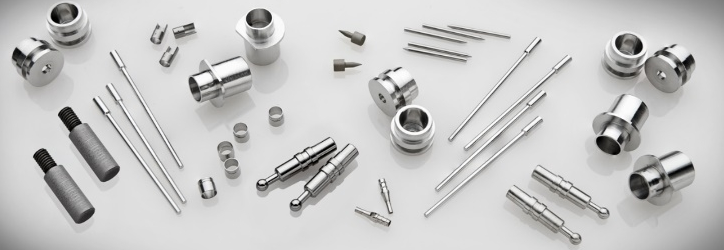
Understanding what industrial polishing services are — and how functional polishing that controls Ra values and removes surface defects differs from cosmetic finishing that simply improves appearance — is essential for procurement teams specifying polishing for precision engineering applications.
Polishing meaning in engineering refers to the controlled process of smoothing a part surface by removing fine machining marks, burrs, scratches, oxidation, and microscopic peaks through controlled abrasion or finishing media — reducing surface roughness to a specified Ra value and eliminating the surface defects that create functional performance problems in demanding service conditions. Bostec describes its polishing services as mechanical polishing techniques used to achieve mirror-like surfaces, improve surface smoothness, and support various materials including metals and plastics.
Professional industrial polishing services for precision engineering applications include: mechanical polishing for controlled Ra reduction, manual polishing for complex geometry and cosmetic zones, mirror polishing for optical-quality or premium appearance requirements, precision polishing for tight Ra specification compliance, pre-polishing before plating or coating to improve adhesion and finish quality, and polishing after CNC machining or grinding to remove directional tool marks and achieve the specified surface condition.
| Polishing Purpose | Primary Goal | Key Performance Parameter | Typical Application |
|---|---|---|---|
| Cosmetic polishing | Improve shine and visual appearance | Visual grade and gloss level | Consumer electronics housings, decorative components |
| Functional polishing | Control roughness for performance | Ra value and surface defect removal | Sliding surfaces, sealing areas, fatigue-critical parts |
| Pre-treatment polishing | Prepare for coating, plating, or anodizing | Surface cleanliness and Ra uniformity | Parts requiring secondary surface treatment |
| Precision polishing | Achieve controlled Ra to engineering specification | Measured Ra with documented verification | Medical devices, semiconductor fixtures, precision molds |
The technical mechanism by which controlled polishing to specified Ra values delivers measurable improvements in friction behavior, corrosion resistance, and fatigue life — and why each of these functional benefits requires a different Ra target and polishing approach — is the core engineering knowledge that product engineers need to specify polishing correctly for demanding applications.
Surface roughness Ra is the arithmetic mean of the absolute values of the surface profile deviations from the mean line — a single number that summarizes the average roughness of the surface. Lower Ra means a smoother surface with smaller peaks and valleys, but the optimal Ra for a specific application depends on the functional requirements of that application rather than simply being "as low as possible."
For friction reduction in sliding contact applications — precision shafts, bearing seats, hydraulic cylinder bores, sliding guides, and mating surfaces — reducing Ra from the typical post-machining value of 1.6 to 3.2 μm to a polished value of 0.2 to 0.8 μm can produce measurable reductions in friction coefficient and wear rate. The smoother surface reduces the contact stress at asperity peaks, reduces the mechanical interlocking between mating surfaces, and improves the hydrodynamic lubrication film formation that separates surfaces in lubricated contact.
The relationship between surface roughness and corrosion resistance is particularly important for stainless steel components in chloride environments, food-grade contact parts, medical device components, and any application where localized corrosion is a service life concern. The valleys and crevices of a rough surface create geometric conditions that trap corrosive species and restrict the oxygen access needed to maintain the passive film that protects stainless steel from corrosion — creating localized concentration cells that initiate pitting and crevice corrosion at stress levels that would not affect a smooth surface.
Polishing to Ra values below 0.8 μm — and ideally below 0.4 μm for the most demanding corrosion-resistant applications — reduces the depth and frequency of surface valleys, improves the uniformity of the passive film, and reduces the geometric conditions that favor localized corrosion initiation. While polishing alone cannot guarantee corrosion resistance in aggressive environments — material selection, heat treatment, passivation, and environment control are all important — it is a meaningful component of a comprehensive corrosion protection strategy.
The fatigue life improvement potential of polishing is most significant for components subjected to cyclic loading — rotating shafts, springs, connecting rods, precision plates, mold components, and any part where fatigue failure is a design concern. Surface asperities act as stress concentrators under cyclic loading, creating local stress amplification at the tips of surface peaks that can initiate fatigue cracks at applied stress levels well below the material's bulk fatigue limit. By removing these surface stress concentrators through controlled polishing, the effective fatigue limit of the component can be improved — particularly for high-strength materials where the ratio of surface fatigue limit to bulk fatigue limit is most sensitive to surface condition.
The polishing direction is also important for fatigue performance — polishing marks oriented perpendicular to the principal stress direction create more severe stress concentration than marks oriented parallel to the stress direction. For fatigue-critical components, specifying both the Ra value and the polishing direction is important for achieving the intended fatigue life improvement.
The complete polishing process — from surface defect removal through final Ra verification — and the selection of the right polishing specification for specific engineering applications requires understanding both the process stages that determine polishing quality and the comparative performance of polishing versus alternative surface finishing options.
| Process Stage | Purpose | Quality Risk If Inadequately Controlled |
|---|---|---|
| Drawing and requirement review | Confirm Ra target, visual grade, critical areas, and functional requirements | Incorrect polishing specification for the application |
| Material inspection | Identify metal or plastic polishing behavior and hardness | Wrong abrasive selection causing surface damage |
| Surface cleaning | Remove oil, dust, machining residue, and contamination | Contamination embedded in polished surface |
| Pre-polishing | Remove major tool marks, burrs, and grinding lines | Residual deep marks that fine polishing cannot remove |
| Fine polishing | Reduce surface roughness to target Ra range | Ra value outside specification |
| Mirror polishing if required | Achieve high-gloss or reflective surface | Haze, orange peel, or uneven reflectivity |
| Ra measurement | Verify surface roughness against specification | Unverified Ra — no objective quality data |
| Visual inspection | Check scratches, pits, haze, or uneven finish | Cosmetic defects that affect appearance or function |
| Packaging | Protect polished surfaces from scratches during shipment | Surface damage that negates the polishing investment |
| Surface Treatment | Best Application | Primary Benefit | Key Consideration |
|---|---|---|---|
| Polishing services | Precision parts, molds, sealing areas, fatigue-critical surfaces | Ra control, friction reduction, corrosion resistance improvement | Requires careful handling after finishing |
| Grinding | Flatness, dimensional accuracy, pre-polish surface preparation | Tight geometry and base surface quality | May leave directional marks requiring subsequent polishing |
| Bead blasting | Matte texture, cosmetic uniformity | Uniform satin appearance | Higher roughness than polishing — not suitable for friction-critical surfaces |
| Anodizing | Aluminum corrosion protection and hardness | Corrosion resistance and surface hardness | Surface preparation quality affects final anodizing appearance |
| Coating and painting | Decorative and protective layers | Color, wear resistance, functional protection | Adhesion quality depends on substrate surface preparation |
Industrial polishing services deliver the most functional value for: precision mold components where surface finish affects mold release performance and part surface quality, medical device components where surface roughness affects cleanability, biocompatibility, and corrosion resistance in body fluid environments, automotive precision parts where friction reduction and fatigue life are primary performance requirements, semiconductor fixtures where surface cleanliness and contamination resistance are critical, food-grade contact parts where surface roughness affects cleanability and bacterial adhesion risk, and mechanical shafts and sealing surfaces where Ra control directly determines tribological and sealing performance.
Specifying and procuring industrial polishing services for precision engineering applications requires systematic pre-procurement evaluation of both functional requirements and supplier process capability — and careful handling and storage practices that protect polished surface quality through the supply chain and assembly process.
Before requesting a polishing services quotation, prepare and confirm the following:
Define whether the polishing goal is cosmetic, functional, or both — and specify the Ra target value for functional polishing requirements
Identify the critical polishing areas on the part — not all surfaces may require the same Ra specification, and defining critical areas allows the supplier to focus polishing effort where it matters most
Specify the material grade — different metals and plastics have different polishing behavior, abrasive requirements, and achievable Ra ranges
Confirm whether mirror polishing is required — mirror polishing requires additional process stages and more careful handling than standard precision polishing
Confirm the dimensional tolerance impact — polishing removes material, and for tight-tolerance parts, the material removal from polishing must be accounted for in the machining allowance
Confirm whether edges are allowed to be rounded — polishing can break sharp edges, which may be desirable for fatigue-critical parts but unacceptable for parts with sharp-edge functional requirements
Confirm the follow-up treatment requirement — if the part will be coated, plated, or anodized after polishing, the Ra specification and surface cleanliness requirement for the polished surface must be compatible with the subsequent treatment process
Specify the surface defect acceptance criteria — scratches, pits, haze, and orange peel that are acceptable for one application may be unacceptable for another
Specify the inspection report requirement — Ra measurement data, visual inspection records, and batch traceability documentation
Specify the packaging standard — polished surfaces require soft, non-abrasive packaging and part separation to prevent surface damage during transport
Use clean cotton or nitrile gloves when handling polished parts — fingerprints and skin oils are particularly visible on mirror-polished surfaces and can be difficult to remove without risk of surface damage
Avoid direct contact between polished surfaces and abrasive materials — even fine dust particles can scratch a mirror-polished surface
Do not stack polished parts without soft protective separators — direct contact between polished surfaces creates pressure marks and scratches
Use soft, non-abrasive packaging materials — foam, tissue paper, or dedicated part trays — to protect polished surfaces during transport and storage
Clean polished surfaces with approved solvents or mild cleaners only — avoid abrasive cloths, harsh chemicals, or cleaning methods that have not been validated for the specific surface and coating condition
Inspect polished surfaces before assembly — verify that the polished finish has not been damaged during transport or storage before the part is assembled into the final product
Keep Ra inspection records for repeat orders — documented Ra measurement data allows future production batches to be verified against the same specification
In 2026, the most commercially valuable polishing services are those that deliver measurable functional improvements — controlled Ra values that reduce friction in sliding contact, remove surface defects that initiate fatigue cracks under cyclic loading, reduce corrosion initiation sites in aggressive environments, and prepare surfaces for coating and plating processes that require consistent surface quality. The polishing meaning that matters for high-performance engineering is not the visual shine of the finished part — it is the Ra value, the surface defect removal, and the functional performance improvement that controlled polishing delivers.
Bostec provides mechanical polishing solutions for high-gloss finishes, smoother surfaces, and compatibility with metals and plastics — with the process capability and technical support that precision engineering applications require for functional surface improvement.
Contact Bostec today to discuss your material, drawings, polishing area, Ra target, functional requirements, inspection needs, follow-up treatment, and production volume. The Bostec team can help develop a customized polishing solution that delivers the surface quality your precision engineering application demands.
Q1: What is the polishing meaning in engineering and why is it more than cosmetic?
In engineering, polishing meaning refers to the controlled process of reducing surface roughness to a specified Ra value and removing surface defects — machining marks, micro-scratches, burrs, and oxidation — that create friction, wear, corrosion initiation sites, and fatigue crack initiation points in demanding service conditions. It is more than cosmetic because the functional performance improvements it delivers — friction reduction, corrosion resistance improvement, fatigue life enhancement, and sealing performance — are measurable engineering outcomes that affect product reliability and service life.
Q2: Why do mechanical parts need polishing beyond what CNC machining provides?
CNC machining produces surfaces with tool marks, directional scratches, and Ra values that are adequate for many applications but insufficient for friction-critical, fatigue-critical, corrosion-sensitive, or sealing-critical applications. Polishing removes these machining-induced surface defects and reduces Ra to the level required for the specific functional performance of the part — providing surface quality that machining alone cannot achieve.
Q3: What is surface roughness Ra and how does it relate to functional performance?
Surface roughness Ra is the arithmetic mean of the absolute values of the surface profile deviations from the mean line — a single number that summarizes the average roughness of the surface. Lower Ra values indicate smoother surfaces with smaller peaks and valleys. Ra directly affects friction behavior in sliding contact, fatigue crack initiation risk under cyclic loading, corrosion initiation risk in aggressive environments, sealing performance at mating surfaces, and coating adhesion quality — making it the primary measurable parameter for specifying and verifying functional polishing quality.
Q4: Can polishing improve fatigue life and how does it work?
Yes, polishing can improve fatigue life by removing surface asperities — the microscopic peaks and valleys of a rough surface — that act as stress concentrators under cyclic loading. By reducing these surface stress concentrators, polishing reduces the local stress amplification that initiates fatigue cracks, effectively improving the fatigue performance of the component. The polishing direction relative to the principal stress direction also affects fatigue performance — marks perpendicular to the stress direction create more severe stress concentration than marks parallel to the stress direction.
Q5: Does polishing help prevent stress corrosion cracking?
Polishing can help reduce the surface defects and roughness that contribute to stress corrosion cracking initiation by reducing the surface valleys and crevices that trap corrosive species and restrict passive film formation. However, polishing alone cannot guarantee SCC prevention — material selection, stress control, heat treatment, passivation, coating, and environment control are all important components of a comprehensive SCC prevention strategy. Polishing is most effective as one element of a complete corrosion protection approach.
Q6: What materials can be polished and what Ra values are achievable?
Many metals and plastics can be polished, including aluminum alloys, stainless steel, carbon steel, brass, copper, titanium alloys, and engineering plastics such as POM, PEEK, and PC. Bostec states that its polishing services are suitable for various materials including metals and plastics. Achievable Ra values depend on the material, the initial surface condition, and the polishing process — typical precision polishing can achieve Ra values of 0.2 to 0.8 μm, while mirror polishing can achieve Ra values below 0.1 μm for suitable materials.
Q7: What should buyers provide before requesting polishing services?
Buyers should provide 2D drawings and 3D CAD files, material grade, target Ra value for each critical surface area, cosmetic and functional surface requirements, dimensional tolerance limits after polishing, mirror finish or satin finish requirement, surface defect acceptance criteria, follow-up treatment requirements such as coating, plating, or anodizing, quantity and delivery schedule, inspection report requirements, and packaging standards for polished surfaces.