Automation is transforming finishing lines — but not every part is a perfect candidate for robots. When parts have deep pockets, tight radii, compound curves, or mixed surface conditions, skilled manual grinding remains one of the most reliable ways to hit cosmetic and functional requirements without damaging critical features. This guide explains where manual work outperforms automation, how manual surface grinding services control quality on difficult geometries, and how to choose the right finishing strategy for your project.
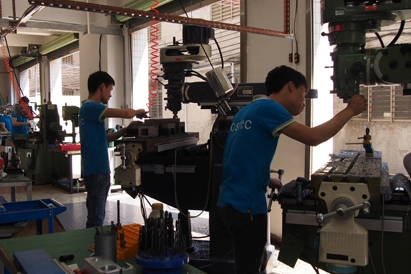
Automated finishing systems — robotic abrasive cells, vibratory finishing, belt grinding machines — excel when parts are uniform, volumes are high, and surfaces are accessible. Complex geometry breaks the fundamental assumption that makes automation work: consistent, predictable contact between the abrasive and the workpiece surface.
| Geometry Challenge | Why Automation Struggles | Risk to the Part |
|---|---|---|
| Internal corners and pockets | Tool cannot maintain consistent angle; contact pressure varies | Over-removal at accessible edges; missed areas in corners |
| Undercuts and re-entrant features | Standard toolpaths cannot access; robot reach envelope limited | Inconsistent finish between accessible and inaccessible zones |
| Compound curves and compound transitions | Variable surface normal means changing optimal attack angle | Chatter marks; uneven scratch pattern; flat spots on curves |
| Variable wall thickness | Different rigidity across the part changes deflection under tool pressure | Heavy removal on flexible areas; inadequate removal on rigid areas |
| Part-to-part variation | Casting, forging, or weld-near surfaces vary dimensionally | Fixed automation cannot adapt; produces inconsistent output |
Automated finishing executes a programmed motion with consistent force and speed. Complex parts require adaptive decision-making — reading the surface, adjusting pressure and angle in real time, and making judgment calls that a sensor array cannot fully replicate. This is not a future technology problem; it is a fundamental physical constraint.
An experienced manual surface grinding operator makes hundreds of micro-adjustments per minute based on visual and tactile feedback. This adaptability is what makes manual work superior on complex parts.
| Adjustment | What the Operator Responds To | Effect on Part Quality |
|---|---|---|
| Contact angle | Surface curvature change; scratch direction requirement | Maintains consistent scratch pattern on compound surfaces |
| Applied pressure | Surface hardness change; feature transition; near an edge | Prevents over-removal at vulnerable zones |
| Tool selection | Surface condition; remaining stock; finish target remaining | Optimized removal rate for each zone |
| Removal rate | Visual color and texture change on the surface | Avoids heat generation on thin sections; prevents removing too much |
| Stroke direction | Grain alignment requirement; cosmetic specification | Consistent directional finish where required |
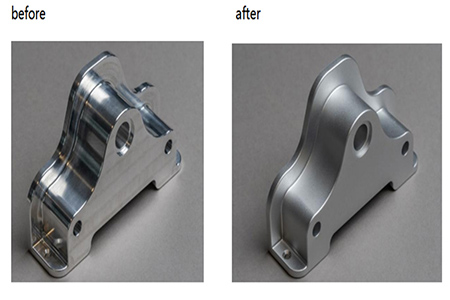
Blending transitions: the zone where one surface meets another — a flat face meeting a radius, a machined surface meeting a forged surface — requires graduated pressure reduction as the tool crosses the transition. An automated system produces a hard line; a skilled operator blends invisibly.
Controlled edge breaking: breaking an edge to a consistent radius requires variable pressure at a moving contact point. Manual control achieves this consistently; automation struggles to reach every edge at the correct angle.
Reduced chatter: manual operators can feel the beginning of chatter through the tool and immediately adjust — stopping the defect before it develops across the surface.
The most common misperception about manual grinding is that it is inherently inconsistent because it is human-performed. In a professional manual surface grinding services environment, the process is as structured as any controlled manufacturing operation.
| Process Element | What It Controls | How It Is Implemented |
|---|---|---|
| Grit sequence | Stepwise material removal and scratch refinement | Written work instruction specifying start grit, progression steps, and finish grit |
| Tool selection | Correct abrasive geometry for each zone | Approved tool list per part feature; no unauthorized substitution |
| Deburring rules | Which edges receive what edge break | Drawing callout or cosmetic standard defining radius or chamfer per zone |
| No-go zones | Areas where grinding is not permitted | Clearly marked on the work instruction; flagged in pre-work briefing |
| Inspection | Method | When Applied |
|---|---|---|
| Surface roughness (Ra) | Profilometer measurement | On cosmetic faces; at completion of final grit step |
| Visual comparison | Reference standard panel under defined lighting | Per piece for cosmetic requirements |
| Edge radius | Optical comparator or radius gauge | Spot check on defined edge break requirements |
| Dimensional verification | Micrometer or CMM for critical features | When grinding is near a dimensional tolerance zone |
Golden sample: a physically approved finished part retained as a visual and tactile reference standard
Operator sign-off: each completed part signed off by the performing operator and reviewed by inspection before leaving the cell
In-process checkpoints: defined inspection at specified intervals during a run — not just at completion
| Scenario | Manual Advantage | Automation Advantage |
|---|---|---|
| Low volume (1–50 pieces) | No setup cost; immediate start; flexible to changes | High setup cost amortized over few pieces — typically not viable |
| Medium volume (50–500 pieces) | Flexible on geometry; lower tooling investment | Setup cost begins to amortize; gains if geometry suits automation |
| High volume (500+, simple geometry) | Higher per-part labor cost | Strong — setup cost fully amortized; consistent cycle time |
| Complex geometry at any volume | Higher operator skill required | Often not achievable at equivalent quality |
| Engineering prototypes | No program required; day-one start | Requires programming time — delays early iterations |
For prototypes, design iterations, and urgent engineering builds, manual surface grinding services can begin with a drawing and a part — no programming, no fixturing design, no robot teach-in. This speed advantage is significant in early product development where design changes are frequent and tooling investment in automation would be wasted.
The most efficient approach for medium and high-volume complex parts is often a hybrid workflow:
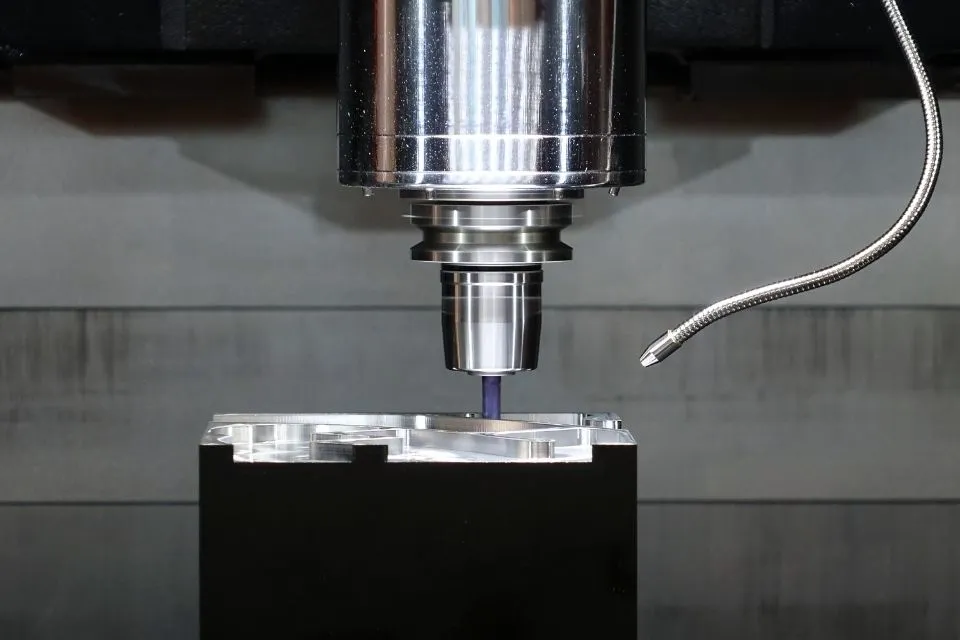
CNC machining or robotic pre-finishing removes the majority of stock and establishes the general surface condition
Manual grinding handles complex zones, transitions, and cosmetic blending that automation cannot achieve consistently
This combination delivers automation's efficiency on accessible surfaces and manual finishing's adaptability on complex features
| Specification | What to Include | Why It Matters |
|---|---|---|
| Surface finish target | Ra value per zone (e.g., Ra 0.8 on cosmetic faces; Ra 1.6 on non-cosmetic) | Without this, the operator cannot know when they are done |
| Cosmetic zones | Marked on drawing or photo reference | Distinguishes faces that will be visible in the assembly from those that will not |
| Allowed tool marks | Directional (specific direction) or non-directional | Cosmetic requirement; affects customer perception |
| Edge break requirement | Radius in mm or visual standard reference | Prevents sharp edges; required for safety and coating adhesion |
| No-go areas | Marked on drawing | Prevents inadvertent removal in tolerance-critical zones |
| Dimensional tolerance after finishing | Any critical dimensions that could be affected | Prevents grinding into a tolerance |
Complete 3D drawing or 2D drawing with all finishing-relevant callouts
Material specification — hardness and alloy affect grit selection and removal rate planning
Quantity and expected volume profile (one-time, repeat, development)
Reference images of acceptable cosmetic appearance if available
Acceptance standard for cosmetic defects — define what is a reject
Manual ground parts with Ra values below 0.8 and cosmetic finishes are vulnerable to scratching in transit. Require:
Individual polybag or foam interleave for cosmetic-face-to-face contact
Rigid outer packaging to prevent part movement
No metal-to-metal contact between parts in the same box
Automation excels when parts are uniform and volumes are high — but complex geometry still rewards human skill and adaptability. Manual grinding remains the most dependable method for controlled blending, edge management, and surface uniformity on challenging shapes. When you work with experienced manual surface grinding services operating a structured process with defined grit progressions, inspection standards, and golden sample references, you gain both the flexibility and quality control that complex parts demand.
Q1: What is manual grinding used for in manufacturing?
Manual grinding is used for deburring, surface blending, weld smoothing, edge breaking, and achieving controlled surface finishes — particularly on parts with complex geometry, variable surfaces, or cosmetic requirements that automated systems cannot consistently deliver. It is also the preferred approach for prototypes and low-volume production where automation setup cost is not justified.
Q2: When is manual surface grinding better than automated finishing?
Manual surface grinding is the better choice when parts have internal corners or pockets that automated tooling cannot access, compound curves where consistent contact angle requires real-time adjustment, part-to-part variation that a fixed automation program cannot accommodate, or when volumes are too low to amortize automation setup cost. It is also superior for cosmetic blending at surface transitions.
Q3: Can manual grinding produce consistent results from part to part?
Yes — when it is operated as a controlled process with documented grit sequences, approved tooling lists, defined edge break requirements, physical golden sample references, and structured in-process inspection checkpoints. Consistency in manual grinding comes from process discipline, not from the absence of human involvement.
Q4: What should I specify when requesting manual surface grinding services?
Define the target surface roughness (Ra) per zone, identify cosmetic zones separately from non-cosmetic zones on the drawing, specify edge break requirements, mark any no-go areas where grinding is not permitted, define allowed tool mark direction if applicable, and state the dimensional tolerance for any features that could be affected by the grinding operation.
Q5: What causes rework in manual grinding projects?
The most frequent causes are: unclear or absent cosmetic acceptance standards that leave operators without a clear "done" condition; missing edge break callouts that result in inconsistent edge treatment; inadequate specification of no-go zones leading to inadvertent removal in critical areas; inconsistent incoming parts from the machining or casting stage; and the absence of a physical golden sample reference that operators and inspectors can compare production parts against.