OEM manufacturers often experience high defect rates not because of poor injection molding processes, but because critical mistakes were made during the mold design stage. A poorly designed mold can create problems such as warpage, sink marks, short shots, flash, dimensional instability, and inconsistent part quality even when the molding machine and materials are properly selected.
Professional mold design focuses on preventing defects before production begins. By applying Design for Manufacturability (DFM), analyzing material flow, optimizing cooling structures, and considering long-term production requirements, manufacturers can significantly reduce quality risks and improve production efficiency.
HKBOSTEC works with OEM customers to develop reliable tooling solutions by combining engineering experience, manufacturing expertise, and quality-focused production processes. A well-designed mold is not only about producing the first acceptable sample; it is about maintaining stable performance throughout thousands or millions of production cycles.
Custom mold design determines how plastic materials flow, cool, shrink, and release during the injection molding process. Since every component has unique geometry, material characteristics, and production requirements, the mold must be engineered specifically for the application.
Many common injection molding defects originate from design problems, including:
| Defect Type | Common Mold Design Cause |
|---|---|
| Warpage | Uneven cooling channels or inconsistent wall thickness |
| Sink marks | Poor cooling design or excessive material thickness |
| Short shots | Incorrect gate location or insufficient filling design |
| Flash | Improper parting line or excessive injection pressure |
| Weld lines | Poor gate positioning and material flow planning |
| Ejection marks | Insufficient draft angles or improper ejector placement |
A professional mold design process evaluates these risks before tooling fabrication begins. This prevents expensive modifications after the mold has already been manufactured.
For OEM manufacturers, the cost of correcting a mold problem after production starts can be significantly higher than investing in proper design analysis at the beginning.
One of the most common mistakes in custom mold projects is designing a part without considering how it will actually be manufactured.
A product design may look functional from an engineering or marketing perspective, but it may create unnecessary difficulties during mold manufacturing and injection molding.
Design for Manufacturability (DFM) ensures that product geometry, material selection, and mold structure work together efficiently.
A proper DFM review evaluates:
Wall thickness consistency
Draft angles
Undercuts
Parting line location
Gate position
Ejection method
Cooling requirements
Mold complexity
Without DFM analysis, manufacturers may encounter problems such as:
Different wall thickness areas cool at different speeds, causing uneven shrinkage and internal stress.
Common results include:
Warped components
Dimensional variation
Surface defects
Reduced mechanical strength
Engineers should aim for consistent wall thickness whenever possible to improve material flow and cooling stability.
Draft angles allow molded parts to release smoothly from the mold cavity.
Insufficient draft angles may cause:
Part sticking
Ejection damage
Increased cycle time
Mold surface wear
The correct draft angle depends on:
Material type
Surface texture
Part depth
Mold finish requirements
The parting line affects:
Mold complexity
Flash control
Cosmetic appearance
Manufacturing cost
An improperly positioned parting line may create visible defects or require additional finishing operations.
A professional custom mold design process considers these factors during the initial engineering stage to create molds that are easier to manufacture, maintain, and operate.
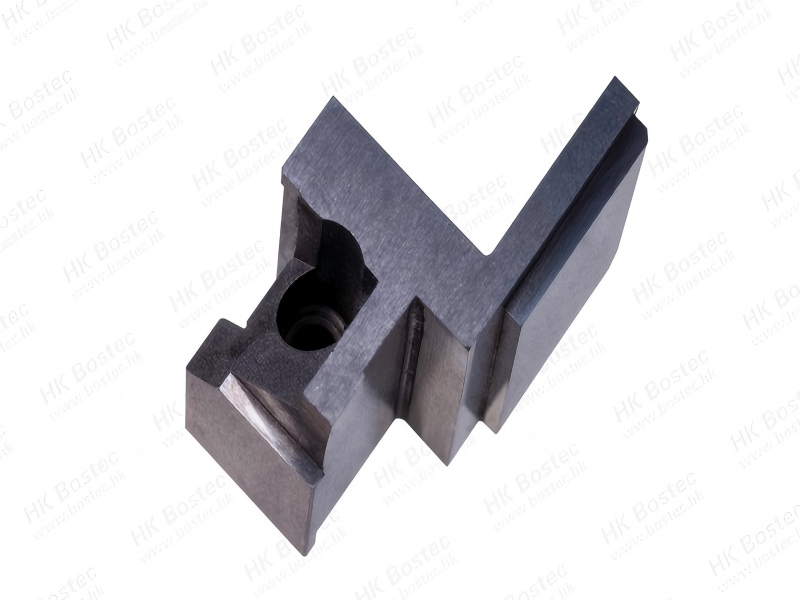
DFM analysis helps identify potential manufacturing issues before the mold is built. Instead of discovering defects during trial production, engineers can optimize the design earlier.
A typical DFM review includes:
| DFM Evaluation Item | Purpose |
|---|---|
| Geometry review | Identify manufacturing risks in part design |
| Mold structure analysis | Ensure practical tooling construction |
| Material assessment | Match material behavior with design requirements |
| Ejection analysis | Prevent damage during part removal |
| Tolerance review | Maintain dimensional consistency |
For complex OEM projects, DFM is especially valuable because it reduces the risk of expensive tooling changes after production begins.
The second major mistake is choosing mold materials based only on initial cost instead of considering production requirements.
A mold is a long-term production asset. The selected steel type, components, and surface treatments directly affect:
Mold lifespan
Part quality
Maintenance frequency
Production stability
Different applications require different tooling materials.
| Mold Material | Typical Application |
|---|---|
| P20 steel | Medium-volume production and general applications |
| H13 steel | High-temperature applications requiring durability |
| S136 stainless steel | High-quality surface finish requirements |
| Aluminum tooling | Prototype and low-volume production |
Choosing unsuitable mold materials can result in:
Premature wear
Poor dimensional accuracy
Surface defects
Increased maintenance costs
During injection molding, molds experience repeated mechanical pressure, thermal cycling, and friction.
A high-volume production mold must withstand:
Thousands of opening and closing cycles
Continuous temperature changes
Repeated injection pressure
Material abrasion
For example, a prototype mold may use aluminum because it offers faster machining and lower cost. However, a mass production mold may require hardened steel to maintain accuracy over a much longer service life.
The quality of mold components also affects production stability.
Important components include:
Ejector systems
Guide pins
Bushings
Inserts
Sliders
Hot runner systems
Low-quality components may increase:
Maintenance frequency
Downtime
Part defects
Production inconsistency
OEM manufacturers should evaluate tooling quality based on total lifecycle cost rather than only initial investment.
Cooling system design is one of the most important factors affecting injection molding quality, cycle time, and production efficiency. Many mold defects occur because the cooling system was not properly considered during the initial design stage.
During injection molding, molten plastic enters the mold cavity at high temperature. The material must cool evenly before the part can be ejected. If different areas of the part cool at different speeds, internal stress and dimensional problems can occur.
A poorly designed cooling system may lead to:
Warpage
Shrinkage variation
Longer cycle times
Uneven surface appearance
Reduced production efficiency
Cooling channels control how heat is removed from the mold. The location, diameter, and distance of cooling channels directly influence temperature distribution.
A professional cooling design considers:
| Cooling Design Factor | Manufacturing Impact |
|---|---|
| Channel placement | Maintains uniform temperature across the mold cavity |
| Channel diameter | Controls cooling efficiency and water flow |
| Distance from cavity | Prevents hot spots and uneven cooling |
| Cooling circuit layout | Improves temperature balance |
| Cooling medium flow | Supports stable production cycles |
For complex parts with different wall thicknesses, standard straight cooling channels may not provide sufficient temperature control. Advanced solutions such as conformal cooling channels can improve cooling efficiency by following the shape of the component.
Uneven cooling creates different shrinkage rates across the part.
For example:
A thicker section cools slower than a thinner section.
One side of a component may shrink more than another side.
Internal stress may build up during cooling.
The result can include:
Warpage occurs when different areas of the molded part shrink unevenly.
Common causes include:
Poor cooling balance
Uneven wall thickness
Incorrect material selection
Improper processing conditions
Sink marks usually appear in thicker sections where the material continues shrinking after the surface has already solidified.
Solutions may include:
Optimizing wall thickness
Improving cooling efficiency
Adjusting gate location
Modifying packing pressure
Insufficient cooling capacity forces manufacturers to increase cooling time, reducing production efficiency.
For OEM manufacturers producing large quantities, even small cycle time increases can significantly affect overall manufacturing costs.
A professional mold supplier evaluates cooling requirements before tooling production begins to ensure stable performance during mass production.
Another critical mistake is moving directly into mold manufacturing without performing proper simulation analysis.
Modern injection molding projects involve complex interactions between:
Material flow
Pressure distribution
Cooling behavior
Shrinkage
Mold filling speed
Without simulation, manufacturers may discover problems only after the first mold trial, resulting in expensive modifications and production delays.
Mold flow analysis allows engineers to predict potential problems before building the mold.
A professional simulation process evaluates:
| Simulation Analysis | Purpose |
| Fill analysis | Determines whether the cavity fills completely |
| Pressure analysis | Identifies excessive injection pressure areas |
| Cooling analysis | Predicts temperature distribution |
| Warpage analysis | Estimates dimensional changes after cooling |
| Weld line prediction | Evaluates potential weak points |
By identifying problems early, engineers can optimize:
Gate location
Runner system
Venting design
Cooling layout
Injection parameters
Skipping mold flow analysis can cause:
A short shot occurs when molten plastic does not completely fill the cavity.
Possible causes include:
Poor gate location
Insufficient injection pressure
Incorrect runner design
Poor material flow planning
When two material flow fronts meet, a weld line may form.
Depending on the location, weld lines can affect:
Appearance
Strength
Product reliability
Simulation helps engineers adjust gate positions to minimize these risks.
Poor flow design may require higher pressure to fill the mold.
This can create:
Higher machine requirements
Increased mold stress
Greater wear
Higher production costs
For complex OEM components, simulation is a valuable investment that prevents costly tooling changes.
A common mistake in custom mold projects is designing a mold without considering the expected production volume and long-term maintenance requirements.
A mold used for a few thousand prototype parts and a mold designed for millions of production cycles require completely different engineering approaches.
Production volume affects decisions including:
Mold material selection
Number of cavities
Component durability
Cooling system complexity
Maintenance planning
For example:
| Production Requirement | Recommended Mold Consideration |
| Prototype production | Faster manufacturing and lower initial cost |
| Medium-volume production | Balanced durability and cost |
| High-volume production | Maximum tool life and reliability |
Choosing the wrong mold structure can create unnecessary costs or unexpected production problems.
Even a high-quality mold requires regular maintenance.
A professional mold design should consider:
Easy component replacement
Access to cooling channels
Wear part inspection
Cleaning requirements
Lubrication points
Poor maintenance planning can lead to:
Increased downtime
Product quality variation
Unexpected repair costs
Shortened mold lifespan
For OEM manufacturers, mold maintenance is part of production reliability.
For complex OEM projects, DFM is especially valuable because it reduces the risk of expensive tooling changes after production begins. Professional custom mold and design solutions help manufacturers optimize tooling structures, improve production stability, and prevent defects before mass production.
Engineers analyze:
Component geometry
Material requirements
Functional requirements
Manufacturing feasibility
The goal is to identify potential risks before tooling begins.
The design is reviewed to improve:
Mold manufacturability
Part quality
Production efficiency
Engineers determine:
Mold base configuration
Cavity layout
Runner system
Cooling structure
Ejection method
Mold flow analysis helps confirm:
Filling performance
Cooling efficiency
Dimensional stability
After mold manufacturing, testing verifies:
Part quality
Cycle time
Mold performance
Production stability
HKBOSTEC supports OEM customers throughout this process by providing engineering-focused tooling solutions.
Through professional precision mold services, HKBOSTEC helps manufacturers develop molds designed for accuracy, repeatability, and long-term production performance.
HKBOSTEC understands that successful OEM projects require more than manufacturing a mold. The goal is to create tooling that delivers stable production results throughout the entire product lifecycle.
The company focuses on:
Engineering-driven mold development
Customized tooling solutions
Precision manufacturing control
Quality inspection
OEM production support
By combining mold design expertise with manufacturing experience, HKBOSTEC helps customers reduce risks associated with tooling defects and production instability.
The company works with OEM manufacturers requiring reliable solutions for:
Plastic injection molds
Precision components
Customized industrial parts
High-quality production tooling
A well-designed mold reduces defects, improves efficiency, and creates long-term value for manufacturers.
Custom mold design directly affects injection molding quality because it determines how plastic materials flow, cool, shrink, and release from the mold cavity. Poor design decisions can lead to defects such as warpage, sink marks, short shots, flash, and dimensional inconsistencies. A professional mold design process evaluates part geometry, material characteristics, cooling requirements, ejection methods, and production volume to create stable manufacturing conditions.
The most common mold design mistakes include ignoring Design for Manufacturability (DFM), selecting unsuitable mold materials, creating inefficient cooling systems, skipping mold flow analysis, and failing to consider production volume and maintenance requirements. These mistakes can increase production costs, extend development cycles, and reduce product consistency during mass production.
Mold flow analysis is important because it allows engineers to predict potential injection molding problems before the mold is manufactured. By analyzing material filling behavior, pressure distribution, cooling performance, weld line locations, and possible warpage, manufacturers can optimize mold structures earlier and reduce costly modifications during trial production.
Cooling system design directly influences temperature distribution and dimensional stability during injection molding. An inefficient cooling layout can create uneven shrinkage, resulting in defects such as warpage, sink marks, and inconsistent part dimensions. A properly designed cooling system helps improve part quality, shorten cycle times, and maintain stable production performance.
OEM manufacturers can reduce defects by involving experienced mold engineers at the early design stage. Professional DFM reviews, proper material selection, mold flow simulation, optimized cooling design, accurate tooling manufacturing, and production validation all help identify and prevent potential quality issues before mass production begins.
OEM manufacturers should evaluate a mold supplier’s design experience, manufacturing capabilities, engineering support, quality control systems, and ability to support long-term production requirements. A reliable supplier should not only manufacture molds but also provide tooling solutions that deliver consistent quality, stable production efficiency, and long service life.
Custom mold design plays a critical role in determining injection molding quality, production efficiency, and long-term manufacturing reliability. Many common defects are not caused by the molding process itself but originate from design decisions made before tooling production begins.
Avoiding mistakes such as poor DFM planning, incorrect material selection, inefficient cooling design, lack of simulation analysis, and insufficient maintenance planning can significantly reduce defect rates and improve overall production performance.
For OEM manufacturers, investing in professional mold engineering is a strategic decision that reduces manufacturing risks and creates more stable production outcomes.
HKBOSTEC helps customers develop reliable tooling solutions by combining engineering expertise, precision manufacturing capabilities, and quality-focused production processes. Through professional mold development and manufacturing support, HKBOSTEC enables OEM partners to achieve consistent component quality, shorter production cycles, and improved product reliability.
A well-designed mold is not only a production tool; it is a foundation for efficient manufacturing, lower defect rates, and long-term business success.
https://www.rosti.com/resources/whitepapers/design-for-manufacturing/
https://www.protolabs.com/resources/design-for-moldability-toolkit/