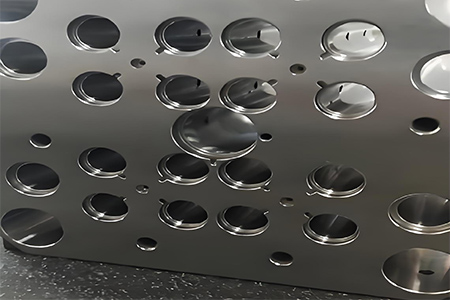
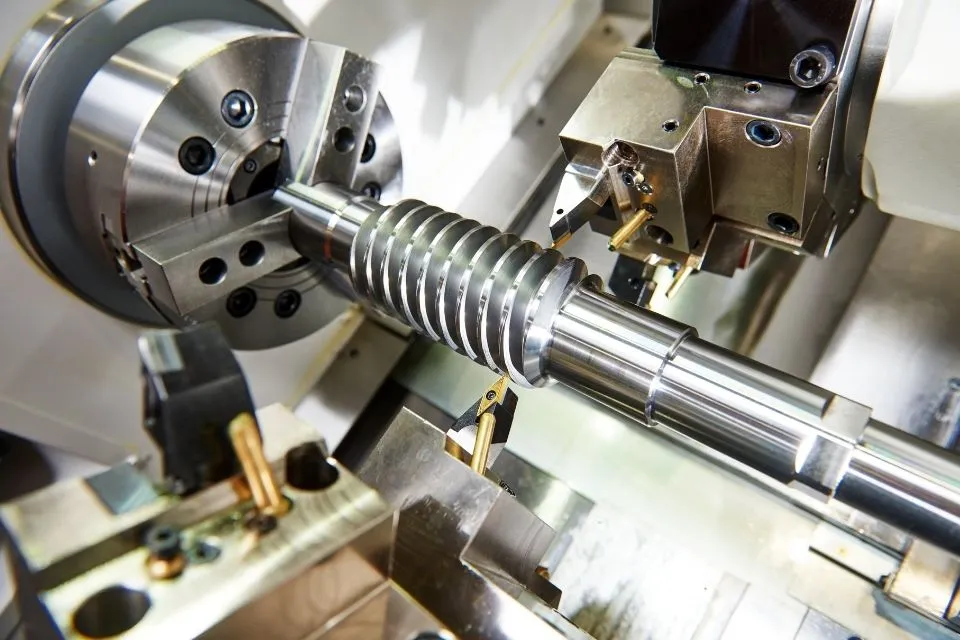
Choosing between 3+2 machining and simultaneous 5-axis machining depends on part complexity, required accuracy, production efficiency, and surface quality expectations. Although both methods use five-axis machine platforms, they operate differently.
3+2 machining positions the cutting tool at a fixed angle before performing three-axis cutting operations. It is effective for many complex components that require machining from multiple orientations. Simultaneous 5-axis machining continuously moves all five axes during cutting, allowing the tool to follow complex contours and maintain optimal cutting conditions throughout the process.
For manufacturers producing highly complex components with advanced surface requirements, simultaneous 5-axis machining provides greater flexibility. However, 3+2 machining can often deliver excellent results at lower programming complexity and manufacturing cost when continuous tool movement is unnecessary.
At HKBOSTEC, machining strategies are selected according to part geometry, material behavior, tolerance requirements, and production objectives rather than simply choosing the most advanced technology.
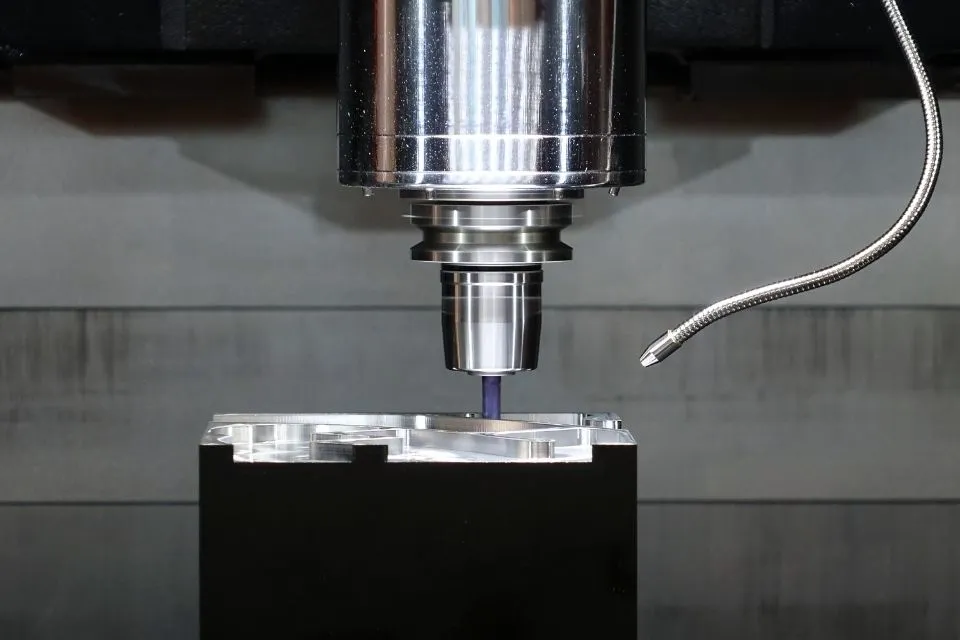
3+2 machining, also known as indexed five-axis machining, uses a five-axis CNC machine to position the cutting tool at different angles before performing standard three-axis machining operations.
During cutting:
The rotary axes position the workpiece or tool
The X, Y, and Z axes perform the cutting movement
The rotary position remains fixed during each machining operation
This method allows manufacturers to access multiple sides of a component without manually repositioning the part.
A typical 3+2 machining process includes:
The CNC system calculates the required tool orientation
Rotary axes move the cutting tool or workpiece into position
The machine locks the orientation
Standard three-axis machining begins
The process repeats for additional surfaces
This approach provides many advantages compared with traditional three-axis machining.
One of the biggest benefits of 3+2 machining is reducing the number of manual setups.
Instead of moving a component between different fixtures, manufacturers can access multiple faces within one machine setup.
This helps improve:
Part consistency
Production efficiency
Alignment accuracy
By tilting the cutting tool, 3+2 machining can reach features that are difficult to access with standard three-axis machining.
Typical applications include:
Angled holes
Sloped surfaces
Deep pockets
Complex cavities
Compared with simultaneous five-axis machining, 3+2 programming is generally simpler because cutting motion occurs mainly in three axes.
This can reduce:
Programming time
Simulation requirements
Manufacturing preparation costs
Simultaneous 5-axis machining allows all five machine axes to move continuously during the cutting process.
The machine controls:
X-axis movement
Y-axis movement
Z-axis movement
Two rotational axis movements
at the same time.
This enables the cutting tool to maintain the ideal orientation throughout complex machining paths.
HKBOSTEC provides advanced 5 axis CNC machining capabilities for customers requiring complex geometries, high precision, and efficient production of challenging components.
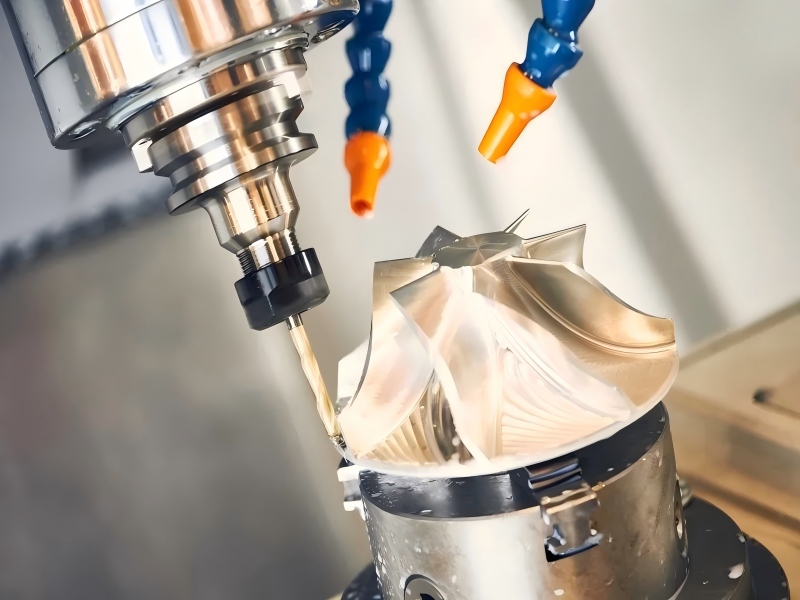
Simultaneous five-axis machining provides significant advantages when manufacturing components with:
Complex curved surfaces
Tight geometric requirements
Difficult tool access
Aerodynamic shapes
Multiple intersecting features
Industries such as aerospace, medical, and advanced industrial manufacturing often rely on this technology because component geometry is becoming increasingly complex.
| Industry | Example Components |
|---|---|
| Aerospace | Turbine components, structural parts |
| Medical | Surgical instruments, implants |
| Automotive | Performance components |
| Energy | Precision mechanical parts |
| Mold manufacturing | Complex cavity surfaces |
| Feature | 3+2 Machining | Simultaneous 5-Axis Machining |
|---|---|---|
| Axis movement | Rotary axes position, then fixed cutting | All axes move continuously |
| Programming difficulty | Lower | Higher |
| Manufacturing cost | Generally lower | Generally higher |
| Surface quality | Good for indexed features | Excellent for complex contours |
| Tool access | Improved compared with 3-axis | Maximum flexibility |
| Best application | Multi-sided components | Complex freeform surfaces |
| Production efficiency | High for suitable parts | High for complex geometries |
Accuracy depends on the specific part design and machining requirements rather than the machining method alone.
3+2 machining can achieve excellent accuracy when:
Features are accessible from fixed angles
The part does not require continuous tool movement
Setup stability is maintained
Simultaneous five-axis machining may provide better results when:
The cutting tool must maintain a constant angle
Complex surfaces are involved
Multiple transitions between surfaces are required
The correct choice depends on the functional requirements of the component.
3+2 machining is often the better option when:
The component has multiple flat surfaces
Features are located at different angles
Continuous contouring is unnecessary
Cost efficiency is important
Examples include:
Machined brackets
Precision housings
Fixtures
Mechanical components
In these cases, 3+2 machining can provide excellent accuracy while reducing programming complexity.
Simultaneous five-axis machining becomes valuable when a component requires continuous tool movement across complex surfaces.
Typical examples include:
Aerospace blades
Medical implants
Complex molds
High-performance components
The ability to continuously adjust tool orientation helps:
Improve surface finish
Reduce tool interference
Maintain cutting efficiency
Minimize secondary operations
One of the most important differences between 3+2 and simultaneous 5-axis machining is the complexity involved in programming, setup, and process optimization.
Although both methods use five-axis machine platforms, they require different levels of planning and technical expertise.
3+2 machining is generally more cost-effective when:
The part requires multiple angled setups
Surfaces can be machined from fixed orientations
Continuous tool movement is unnecessary
Programming complexity needs to remain controlled
Because the cutting process is similar to traditional three-axis machining after positioning, programming and simulation are usually simpler.
Benefits include:
Shorter programming time
Easier process verification
Lower manufacturing preparation costs
Efficient production for many complex parts
Simultaneous five-axis machining typically requires more advanced programming because all axes move together during cutting.
Additional considerations include:
Complex CAM programming
Advanced collision simulation
Toolpath optimization
Higher machine capability requirements
However, the additional investment can provide significant advantages for highly complex components.
For example, aerospace components with continuously changing curved surfaces may require simultaneous movement to achieve the required geometry and surface quality.
Tool orientation is one of the key advantages of five-axis machining.
In conventional three-axis machining, the cutting tool approaches the workpiece from a fixed direction. This can create limitations when machining:
Deep cavities
Angled surfaces
Curved geometries
Five-axis machining allows manufacturers to adjust the tool angle, improving:
Cutting efficiency
Tool life
Surface quality
Accessibility
Maintaining the correct tool angle helps ensure:
More consistent cutting conditions
Reduced vibration
Better chip removal
Improved surface finish
This is particularly important when machining materials such as:
Titanium alloys
Stainless steel
Hardened steels
The correct choice depends on the component design and manufacturing requirements.
Engineers should evaluate:
Simple multi-sided components may not require continuous five-axis movement.
Examples suitable for 3+2 machining:
Brackets
Housings
Fixtures
Mechanical plates
Components with complex freeform surfaces may require simultaneous machining.
Examples include:
Turbine blades
Medical implants
Aerospace structures
Advanced molds
Surface quality is often a deciding factor.
3+2 machining can provide excellent results for:
Flat surfaces
Angled faces
Standard precision features
Simultaneous five-axis machining provides advantages for:
Continuous curved surfaces
Complex transitions
Aerodynamic geometries
Production requirements also influence process selection.
| Production Situation | Recommended Approach |
|---|---|
| Prototype components | 3+2 or 5-axis depending on geometry |
| Small precision batches | 3+2 machining often effective |
| Complex aerospace parts | Simultaneous 5-axis |
| High-value components | Advanced 5-axis strategies |
| Application | Preferred Method | Reason |
|---|---|---|
| Precision brackets | 3+2 Machining | Multiple angled surfaces |
| Complex molds | Simultaneous 5-axis | Continuous contour machining |
| Aerospace blades | Simultaneous 5-axis | Complex curved geometry |
| Medical implants | Simultaneous 5-axis | Organic shapes and high accuracy |
| Machine fixtures | 3+2 Machining | Efficient multi-face machining |
| Prototype parts | Both | Depends on geometry |
At HKBOSTEC, five-axis machining strategies are selected according to the actual requirements of each component.
The manufacturing process considers:
Part geometry
Material characteristics
Required tolerance
Surface finish expectations
Production efficiency
For customers requiring advanced 5 axis machining solutions, HKBOSTEC provides precision manufacturing support for complex components that require accurate multi-angle machining.
The company combines advanced CNC equipment, engineering expertise, and inspection processes to produce components for demanding industries.
Five-axis machining improves efficiency by reducing the number of setups required for complex parts.
Traditional machining may require:
Machine setup
Fixture adjustment
Part repositioning
Alignment verification
Additional machining operations
Each additional setup introduces potential risks, including:
Positioning errors
Longer production time
Increased operator involvement
Five-axis machining can reduce these issues by accessing multiple surfaces within a single setup.
Benefits include:
Improved repeatability
Reduced handling time
Better feature alignment
Shorter production cycles
CAM programming is essential for successful five-axis manufacturing.
Advanced CAM systems help engineers manage:
Toolpath generation
Collision avoidance
Tool angle optimization
Machining simulation
For simultaneous five-axis machining, programming quality directly affects:
Surface finish
Machining time
Tool performance
Final accuracy
Experienced programmers are therefore an important part of successful five-axis production.
3+2 machining positions the cutting tool at fixed angles before machining, while simultaneous five-axis machining continuously moves all axes during cutting.
Not always. The best method depends on part geometry, tolerance requirements, surface finish expectations, and production goals. Many components can be produced efficiently using 3+2 machining.
In many cases, 3+2 machining has lower programming and preparation costs because the cutting process is simpler. However, complex components may be more efficient with simultaneous five-axis machining.
Common industries include aerospace, medical, automotive performance, energy, and precision tooling.
Five-axis machining can improve accuracy by reducing the number of setups required and maintaining better positional relationships between features.
HKBOSTEC combines machining expertise, process planning, and inspection capability to deliver precision components requiring complex multi-axis manufacturing.
3+2 machining and simultaneous 5-axis machining are both valuable manufacturing approaches, but they serve different engineering purposes.
3+2 machining provides an efficient solution for components requiring multiple fixed orientations, offering reduced programming complexity and cost-effective production. Simultaneous five-axis machining provides advanced capability for complex geometries, continuous surfaces, and demanding applications where tool orientation must change throughout the cutting process.
The best machining strategy depends on component design, material requirements, tolerance expectations, and production objectives.
With advanced multi-axis machining capabilities and engineering-focused manufacturing processes, HKBOSTEC helps customers select the appropriate five-axis solution for precision components used in aerospace, medical, industrial, and tooling applications.