For OEMs, robotics companies, electronics brands, medical device manufacturers, automotive suppliers, and industrial equipment buyers sourcing precision machined components, the most commercially consequential question in supplier evaluation is not whether the supplier can produce a good prototype — it is whether the supplier can maintain the same dimensional accuracy, surface finish, and functional performance across the 1,000th, 10,000th, and 100,000th part as they demonstrated in the approved sample. This distinction between prototype capability and mass-production consistency is the defining difference between a precision CNC milling supplier that creates value and one that creates risk.
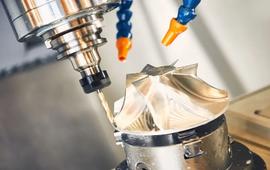
CNC machining milling is a subtractive manufacturing process where rotating cutting tools remove material from a workpiece according to programmed toolpaths — producing high-precision parts with complex geometry, flat surfaces, slots, holes, pockets, profiles, threads, and tight dimensional requirements. But the technical capability of the CNC machine itself is only one element of the production system that determines whether batch production consistency is achievable. CNC milling services that deliver genuine micron-level precision across high-volume production runs require advanced CNC equipment combined with stable fixturing, in-process inspection, CMM final inspection, tool wear control, thermal compensation, and documented quality management — a complete production system rather than a collection of capable machines.
Bostec's CNC milling services are positioned for high-precision components, excellent repeatability, advanced CNC milling machines, tight tolerances, and consistent quality for large batches — providing the complete production system capability that high-volume precision parts require. This guide covers the complete picture for B2B procurement teams and engineering managers: why good samples and poor mass production is a systemic problem rather than a random quality failure, what precision CNC milling services include and what materials they cover, how in-process inspection and CMM final inspection create the quality feedback loop that maintains batch consistency, how process control factors including fixtures, tool wear, and thermal compensation determine long-run dimensional stability, and what procurement and supplier management practices protect part quality across the full production lifecycle. Secondary keywords relevant to this decision — tight tolerance machining, CNC milling quality control, and batch production consistency — are addressed throughout.
The commercial case for investing in supplier quality system evaluation — rather than simply comparing machine lists and unit prices — starts with a clear understanding of why batch production dimensional drift is a systemic problem that capable CNC equipment alone cannot prevent.
Tool wear is the most common and most predictable cause of dimensional drift in high-volume CNC milling. As cutting tools wear during production, the effective cutting geometry changes — causing gradual dimensional shifts that are invisible in the first parts of a production run but become significant after hundreds or thousands of parts. A supplier who does not monitor tool wear and replace tools on a controlled schedule will produce parts that meet tolerance at the beginning of a tool life cycle and drift out of tolerance at the end — creating a batch where some parts pass inspection and others fail, with no clear boundary between them.
Thermal expansion is the most technically subtle cause of dimensional drift in precision CNC milling. During machining, cutting heat is generated at the tool-workpiece interface and conducted into the machine structure, spindle, fixture, and workpiece. As these components heat up, they expand — causing dimensional changes that can be significant at the micron level even when the CNC program is unchanged. For tight tolerance machining where the allowable dimensional variation is measured in microns, thermal expansion that is not compensated can cause parts that were in tolerance at the beginning of a production shift to drift out of tolerance as the machine reaches thermal equilibrium.
Fixture instability is a cause of dimensional drift that is often overlooked in supplier evaluation. If the fixture that holds the workpiece during machining does not locate the part consistently and repeatably, the datum relationship between the workpiece and the cutting tool will vary from part to part — creating dimensional variation that cannot be corrected by adjusting the CNC program. Dedicated fixtures with repeatable locating datums are essential for batch production consistency in precision CNC milling.
Insufficient in-process inspection is the process control failure that allows all of the above causes of dimensional drift to produce large quantities of defective parts before the problem is detected. If inspection only happens at the end of a production batch, a supplier may discover dimensional problems after hundreds or thousands of parts are already machined — creating scrap, rework, delivery delays, and the commercial consequences that follow.
For high-volume precision parts, batch production dimensional drift creates assembly failures that halt production lines, product recalls that create liability and brand damage, delayed deliveries that affect customer commitments, higher scrap rates that increase total cost beyond the original quote, and supplier disputes that consume management time and damage the supply chain relationship. The cost of these consequences consistently exceeds the cost of the quality system investment that would have prevented them.
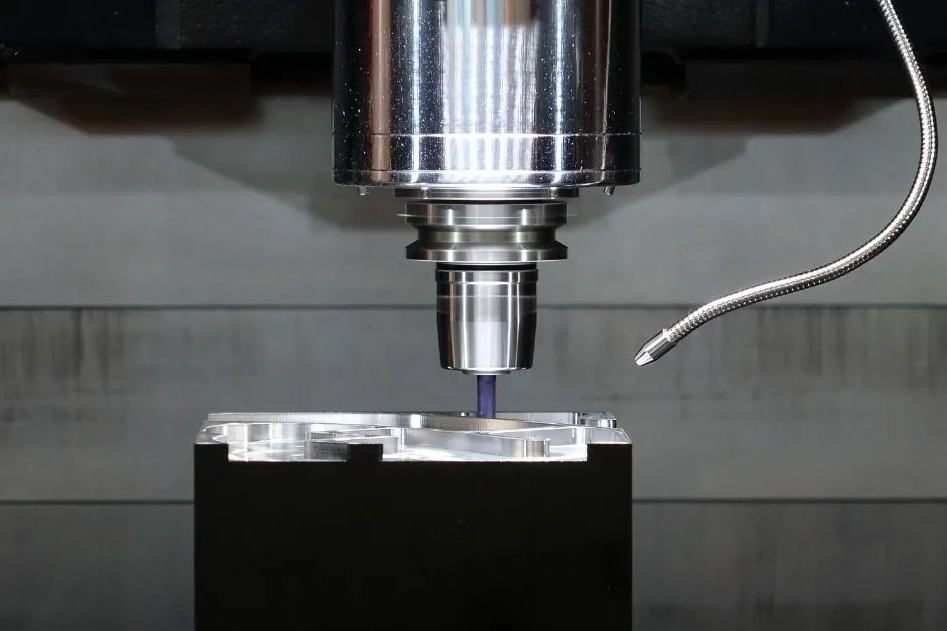
Understanding what professional CNC milling services include — beyond the basic capability to run a CNC machine — is essential for procurement teams evaluating supplier capability for high-volume precision parts.
CNC machining milling is a computer-controlled subtractive manufacturing process where rotating cutting tools remove material from a workpiece according to programmed toolpaths — producing high-precision parts with complex geometry, flat surfaces, slots, holes, pockets, profiles, threads, and tight dimensional requirements. Professional CNC milling services for high-volume production include not only the machining operation itself but the complete production system: CAD/CAM programming, tooling selection and management, fixture design and maintenance, in-process inspection, CMM final inspection, surface finishing support, batch documentation, and quality management.
Bostec's CNC milling capabilities include CNC machining milling, horizontal CNC milling, large CNC milling, CNC turning and milling, and custom CNC milling for various applications — providing the range of machining configurations that complex precision parts require.
| Material Type | Common Grades | Key Machining Consideration for Batch Consistency |
|---|---|---|
| Aluminum alloys | 6061, 7075, 5052 | Thermal expansion, burr control, surface finish consistency |
| Stainless steel | 304, 316, 17-4PH | Tool wear rate, work hardening, heat control |
| Carbon steel | 45#, Q235, 4140 | Cutting force stability and fixture rigidity |
| Brass and copper | C360, copper alloys | Chip control and surface quality consistency |
| Engineering plastics | POM, PEEK, PC, ABS, Nylon | Thermal deformation and clamping mark prevention |
| Titanium alloys | TC4 / Grade 5 | Heat buildup management and accelerated tool wear |
The material selection directly affects the process control strategy required for batch consistency — aluminum's thermal expansion characteristics require different compensation approaches than stainless steel's work hardening behavior, and engineering plastics' sensitivity to clamping force requires different fixture design than metal components.
The technical mechanism by which in-process inspection and CMM final inspection work together to maintain dimensional consistency across high-volume CNC milling production — and why inspection must be a continuous feedback loop rather than a final gate — is the core quality management knowledge that procurement teams need to evaluate supplier quality systems for tight tolerance machining.
In-process inspection is the quality control practice of checking critical dimensions during production — not only at the end of the batch — so that dimensional drift can be detected and corrected before it produces large quantities of defective parts. For batch production consistency in precision CNC milling, in-process inspection is not a quality enhancement — it is the minimum quality control practice that makes high-volume tight tolerance machining commercially viable.
A structured in-process inspection program for precision CNC milling includes: first article inspection of the first qualified part before mass production begins — confirming that the machine setup, tooling, and fixture are producing parts within tolerance before committing to the full production run; periodic dimensional checks after a defined number of parts — catching tool wear drift before it exceeds the tolerance boundary; go/no-go gauge checks for fast production verification of critical features; digital caliper, micrometer, and height gauge measurement of critical dimensions; surface roughness checks at defined intervals; thread gauge inspection for threaded features; and tool offset adjustment records that document every correction made during the production run.
A CMM — coordinate measuring machine — provides the objective, traceable dimensional verification that in-process inspection with hand gauges cannot fully replace for complex precision parts. CMM inspection can verify position tolerance, flatness, parallelism, perpendicularity, concentricity, profile tolerance, hole pattern accuracy, datum relationships, and complex 3D geometry — the full range of GD&T requirements that precision parts specify.
For high-volume CNC milling projects, CMM final inspection serves two functions: it provides the objective quality data that supports batch acceptance decisions and customer quality documentation requirements, and it provides the dimensional trend data that allows the quality team to identify developing process problems — tool wear patterns, thermal drift trends, fixture wear — before they cause batch failures.
| Stage | Quality Control Action | Purpose |
|---|---|---|
| DFM review | Check drawings, tolerances, material, datum design | Prevent unrealistic tolerance risk before production |
| First article inspection | Inspect first qualified part before mass production | Confirm machine setup and process capability |
| In-process inspection | Check critical dimensions at defined intervals | Catch dimensional drift before it creates defective parts |
| Tool wear monitoring | Track tool life and replace before failure | Prevent gradual dimensional change from worn tools |
| Thermal compensation | Offset heat-related dimensional changes | Improve long-run dimensional stability |
| CMM final inspection | Verify critical dimensions with coordinate measurement | Provide objective inspection data for batch acceptance |
| Batch documentation | Record inspection results, tool changes, and process data | Support traceability and continuous improvement |
The process control factors that determine whether a precision CNC milling production system can maintain micron-level dimensional consistency across long production runs — and why each factor must be actively managed rather than assumed to be stable — is the technical knowledge that distinguishes a genuine precision CNC milling supplier from one that can only demonstrate capability on short prototype runs.
Dedicated fixtures with repeatable locating datums are the foundation of batch production consistency in precision CNC milling. A fixture that locates the workpiece consistently and repeatably — with the same datum relationship between the workpiece and the cutting tool for every part in the production run — eliminates the part-to-part positional variation that inconsistent fixturing creates. Fixture maintenance is equally important: a fixture that locates correctly when new but develops wear or contamination over time will introduce gradual positional drift that mimics tool wear drift and is difficult to diagnose without systematic fixture inspection.
Tool wear management is the process control practice that most directly prevents the gradual dimensional drift that is the most common cause of batch production quality failures in high-volume CNC milling. A structured tool wear management program includes: defined tool life limits based on the specific material, cutting parameters, and tolerance requirements of the part; scheduled tool replacement before the tool life limit is reached — not after dimensional drift is detected; tool runout inspection before production to verify that tool holders are not introducing positional error; and tool change records that document every tool replacement during the production run.
Thermal compensation is the process control practice that addresses the dimensional changes caused by heat generated during machining — the most technically challenging cause of dimensional drift in precision CNC milling because it is continuous, gradual, and invisible without systematic measurement. A comprehensive thermal compensation program includes: machine warm-up routines that bring the machine to thermal equilibrium before production begins; temperature-controlled production environment that minimizes ambient temperature variation; stable coolant temperature and consistent coolant flow that controls heat removal from the cutting zone; toolpath strategies that distribute cutting heat evenly rather than concentrating it in specific areas; and compensation values based on measured dimensional drift that are applied as offset adjustments during the production run.
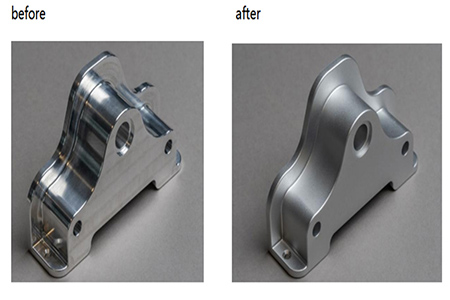
Surface finish consistency is both a functional requirement for many precision parts and a quality indicator that reflects the overall stability of the machining process. Consistent Ra values across a production batch indicate that cutting parameters, tool condition, coolant flow, and machine stability are all under control. Surface finish variation between parts or between batches indicates process instability that may also be affecting dimensional consistency — making surface finish monitoring a useful early warning indicator for the complete machining process.
Selecting the right CNC milling supplier for high-volume precision parts requires systematic evaluation of both technical capability and quality system maturity — and ongoing production management practices that protect part quality across the full production lifecycle.
| Supplier Type | Best Application | Primary Advantage | Key Buyer Risk |
|---|---|---|---|
| Prototype-only shop | Small sample orders and development | Fast turnaround | May lack mass-production process control |
| Low-cost machining shop | Simple parts with loose tolerances | Lower unit price | Higher risk for tight tolerance batch production |
| Precision CNC milling supplier | OEM production parts with tight tolerances | Better quality planning and repeatability | Requires detailed technical communication |
| 5-axis CNC supplier | Complex geometry with multiple machined faces | Fewer setups and higher accuracy potential | Higher machining cost |
| Full-service machining supplier | Machining plus finishing plus assembly | Better project coordination | Must verify inspection capability independently |
Before requesting a quote for precision CNC milling, prepare and confirm the following:
Provide 2D engineering drawings with all GD&T callouts, datum references, and critical-to-quality dimensions clearly defined
Provide 3D CAD files in a format compatible with the supplier's CAM software
Specify the material grade and any material certification requirements — material variation between batches can affect dimensional consistency
Define the critical-to-quality dimensions that must be verified by CMM inspection and specify the required measurement report format
Specify the surface roughness requirement for all functional and cosmetic surfaces, including tool mark direction and deburring requirements
Specify the prototype quantity and mass-production batch schedule — this information affects fixture investment, process planning, and quality system setup
Confirm the inspection report requirements — first article inspection report, in-process inspection records, CMM final inspection reports, and batch traceability documentation
Confirm the surface finishing requirements — anodizing, coating, polishing, or other secondary processes — and verify that the supplier can coordinate these processes without compromising dimensional accuracy
Confirm the packaging standard for precision parts — dedicated trays, protective packaging, and cosmetic surface protection requirements
For repeat production orders, buyers and suppliers should maintain: an approved golden sample that serves as the physical reference standard for all subsequent production; a locked machining process document that records the approved machine, tooling, fixture, cutting parameters, and inspection plan; fixture maintenance records that document fixture condition and any repairs or replacements; tool life records that document tool replacement history and any dimensional drift events; CMM report archives that provide the dimensional trend data for continuous improvement; and a corrective action log that documents any quality issues and the process changes implemented to prevent recurrence.
For high-volume precision parts, a good sample is only the beginning of the quality story. True CNC machining milling capability means maintaining the same dimensional accuracy, surface finish, and functional performance across every batch — through the combination of in-process inspection that catches drift before it creates defective parts, CMM final inspection that provides objective dimensional verification, tool wear management that prevents gradual dimensional change, thermal compensation that addresses heat-related dimensional drift, and dedicated fixtures that ensure repeatable datum positioning for every part in every production run.
Bostec's CNC milling services are positioned for high-precision components, tight tolerances, excellent repeatability, material versatility, and consistent quality in large-batch production — providing the complete production system capability that high-volume precision parts require from a high-precision CNC milling supplier.
Contact Bostec today to discuss your CAD drawings, material requirements, tolerance targets, batch quantity, inspection needs, CMM report requirements, surface finishing, and delivery schedule. Bostec can help evaluate a precision CNC milling solution from prototype validation to high-volume production — and provide the quality documentation and process traceability that demanding OEM and industrial applications require.
Q1: What is CNC machining milling and what types of parts can it produce?
CNC machining milling is a computer-controlled subtractive manufacturing process where rotating cutting tools remove material from a workpiece according to programmed toolpaths. It can produce high-precision parts with complex geometry, flat surfaces, slots, holes, pockets, profiles, threads, and tight dimensional requirements — in materials including aluminum alloys, stainless steel, carbon steel, brass, engineering plastics, and titanium alloys.
Q2: Why do CNC milled samples pass inspection but mass-production parts fail?
This typically happens because of tool wear that causes gradual dimensional drift during long production runs, thermal expansion that shifts dimensions as the machine reaches operating temperature, fixture instability that introduces part-to-part positional variation, material batch variation that changes cutting behavior, or insufficient in-process inspection that allows drift to continue until end-of-batch inspection detects the problem — by which point many defective parts have already been produced.
Q3: What is tight tolerance machining and what process controls does it require?
Tight tolerance machining refers to producing parts with very small allowable dimensional variation — typically measured in microns. It requires stable CNC machines with regular calibration, controlled tooling with monitored wear and scheduled replacement, dedicated fixtures with repeatable locating datums, thermal compensation to offset heat-related dimensional changes, in-process inspection to detect drift during production, and CMM final inspection to verify complex dimensional and geometric requirements.
Q4: Why is in-process inspection more important than end-of-batch inspection for high-volume CNC milling?
In-process inspection detects dimensional drift during production — allowing the machining process to be corrected before large quantities of defective parts are produced. End-of-batch inspection only detects problems after the entire batch has been machined — meaning that if dimensional drift occurred during the run, the entire batch may need to be scrapped or reworked. For high-volume production, in-process inspection is the quality control practice that makes tight tolerance machining commercially viable.
Q5: What does CMM inspection verify that hand gauge inspection cannot?
CMM inspection can verify complex dimensional and geometric requirements including position tolerance, flatness, parallelism, perpendicularity, concentricity, profile tolerance, hole pattern accuracy, datum relationships, and complex 3D geometry — requirements that cannot be reliably verified with hand gauges. CMM inspection also provides traceable, documented measurement data that supports batch acceptance decisions and customer quality documentation requirements.
Q6: How does thermal compensation improve CNC milling consistency in long production runs?
Thermal compensation offsets the dimensional changes caused by heat generated during machining — which causes the machine structure, spindle, fixture, and workpiece to expand as they reach operating temperature. Without thermal compensation, parts machined at the beginning of a production shift may be dimensionally different from parts machined after the machine has reached thermal equilibrium. Thermal compensation — through machine warm-up routines, temperature-controlled environments, stable coolant temperature, and measured offset adjustments — reduces this heat-related dimensional variation and improves long-run dimensional stability.
Q7: What should buyers provide before requesting CNC milling services for high-volume production?
Buyers should provide 2D engineering drawings with GD&T callouts and datum references, 3D CAD files, material grade and certification requirements, critical-to-quality dimension identification, surface roughness requirements, prototype and mass-production quantities, inspection report requirements including CMM report format, surface finishing requirements, packaging standards, and annual forecast — this information allows the supplier to plan the complete production system and provide an accurate technical and commercial proposal.